
-
 Patient Advocates Tune in for Precision Medicine Primer
Scientists and physicians discussed advances in targeted therapies and immunotherapies, as well as the lessons COVID-19 research has taught to cancer researchers.
by Kevin McLaughlin
-
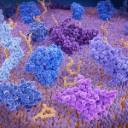 Immunotherapy Options for Breast Cancer
Two immune checkpoint inhibitors are now approved for treatment of some people with advanced breast cancer, but trial results have raised some questions.
by Anna Goshua
-
 What Is Tumor Mutational Burden?
The Food and Drug Administration approved an immunotherapy drug for tumors with high tumor mutational burden regardless of tumor type. But some medical oncologists say it's not clear the biomarker is valid across all cancer types.
by Anna Azvolinsky
-
 Treating Cancer Patients With COVID-19: A New York City Experience
An analysis of cancer patients who were infected with the coronavirus and treated at Memorial Sloan Kettering Cancer Center in New York City suggests certain risk factors may predict more severe COVID-19.
by Anna Azvolinsky
-
 Exploring Immunotherapy for Triple Negative Breast Cancer
Following the approval of the first immunotherapy for breast cancer by the U.S. Food and Drug Administration in March 2019, experts at the San Antonio Breast Cancer Symposium discussed avenues for further development.
by Marci A. Landsmann
-
 Navigating Hospital Discharge Decisions
Patients with advanced cancer often go to rehabilitation facilities after a hospital stay in hopes of gaining the strength for further treatment, but the majority do not go on to receive additional cancer therapy, a study reports.
by Ashley P. Taylor
-
 Immunotherapy in the Elderly
Immune checkpoint inhibitors can be effective treatments for elderly people with some types of advanced cancer, but more information is needed on their risks and benefits in this group.
by Emma Yasinski
-
 The Crowded Field of Checkpoint Inhibitors
Drug developers behind currently approved checkpoint inhibitors discuss the pros and cons of competition in the field.
by Kate Yandell
-
 What Is Hyper-Progression?
Some researchers believe that immunotherapy occasionally causes cancer to grow faster, a phenomenon dubbed hyper-progression.
by Kate Yandell
-
 First Immunotherapy Approved for Breast Cancer
Medical oncologist Leisha A. Emens discusses the significance of the first U.S. Food and Drug Administration approval of an immunotherapy treatment for breast cancer.
by Anna Azvolinsky
When doctors told Yvonne McLean Florence she was eligible to participate in a research trial testing an experimental drug, she joined. She wants more people to have the same opportunity.
by Yvonne McLean Florence
Targeted Therapy Improves Pancreatic Cancer SurvivalA recently approved drug that targets RAS proteins meaningfully improves outcomes for people with this difficult-to-treat cancer.
by Sandra Gordon
Bring On the WavesA surfer’s love for the ocean guides her through breast cancer treatment and beyond.
by Cameron Walker
Does Exercise Benefit Children With Cancer?New guidelines recommend children and adolescents with cancer get regular physical activity to mitigate side effects from treatment.
by Erin O’Donnell

-
 AACR OMB Statement and Call to Action
The AACR is deeply concerned that proposed OMB regulations would disrupt federal research grant giving, severely weakening a program that has supported American medical innovation for decades.
-
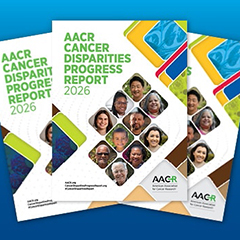 AACR Cancer Disparities Progress Report
The AACR Cancer Disparities Progress Report 2026 highlights recent progress in reducing cancer disparities and emphasizes the continued need for transformative research.
Cancer Research at a Crossroads
