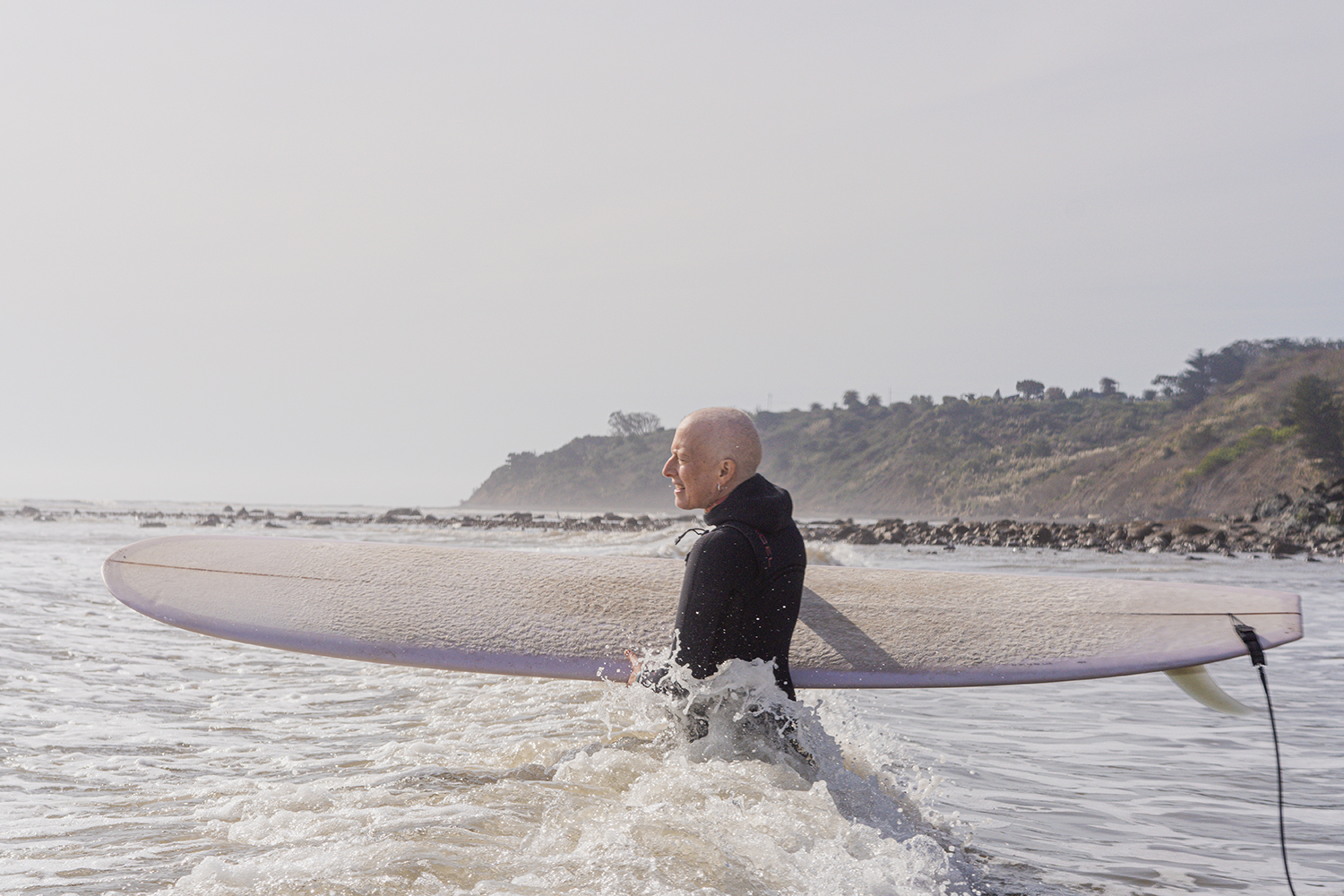
DANIELLE CASS HAD WATCHED surfers from the beach for years until 2021, when she decided it was time to dive in herself. Once she caught her first wave, at 52, she was hooked. Several times a week, she would wake up at 4 a.m. to drive from her home in Berkeley, California to a surf break north of San Francisco. She took multiple lessons, traveled to surf retreats, and became part of a close-knit community of surfers.
Then in August 2025, a routine mammogram revealed an abnormal mass in her left breast, which led to additional imaging and a biopsy. On Sept. 5, Cass learned she had invasive ductal carcinoma, the most common form of invasive breast cancer. Her cancer was positive for progesterone, estrogen, and HER2 receptors, which means that the cancer grows in response to these hormones and the HER2 protein. HER2-positive cancer is considered aggressive, but recent advances in targeted treatments have improved the prognosis for those with this form of breast cancer.
“Surfing saved my life after I was diagnosed,” says Cass, who works in artificial intelligence safety and security for Microsoft. As she navigated the decisions immediately following her diagnosis, “surfing reminded me that I could do hard things.” And being in the ocean was a refuge: “When you get in the water, I feel like you paddle out into a force field where nothing can touch you.”
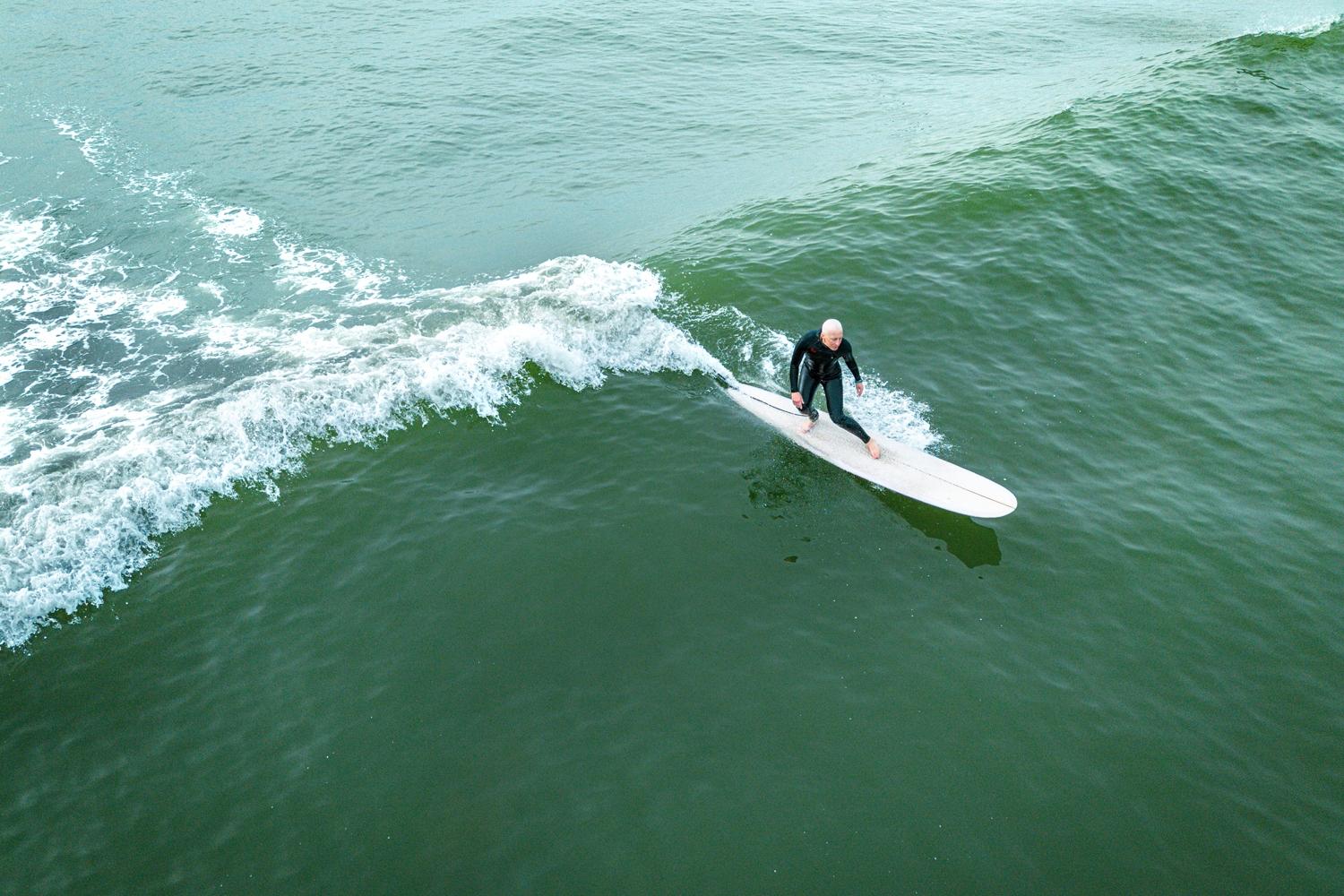
Photo by Matthew Berridge
Surfing Benefits for People With Cancer
The benefits of surfing have been well-studied, says Christina Dieli-Conwright, a clinical exercise physiologist and population health researcher at Dana-Farber Cancer Institute and Harvard Medical School in Boston who studies the role of exercise following a cancer diagnosis. Physically, she says, “you can get your heart rate up, build overall muscle strength, balance, core strength, and upper body strength with paddling.” Add all this to the sense of belonging one can find in the surfing community and the time spent in nature. “Surfing sounds like an amazing thing to plan your treatment trajectories around,” she says.
That’s just what Cass did. As she and her doctors planned out her care, she started reading research on the connection between exercise and cancer outcomes. “The stronger you are and the more in shape you are, the sooner your body will recover from treatment. Surfing was a way to get as strong as I could.”
For anyone with cancer, continuing—or embarking on—a form of exercise that feels supportive and sustainable can help before, during and after treatment. In 2018, Dieli-Conwright and her colleagues published a study finding that exercise can reduce the severity of metabolic syndrome, a condition tied to increased cardiovascular risk, Type 2 diabetes, and recurrence in breast cancer patients.
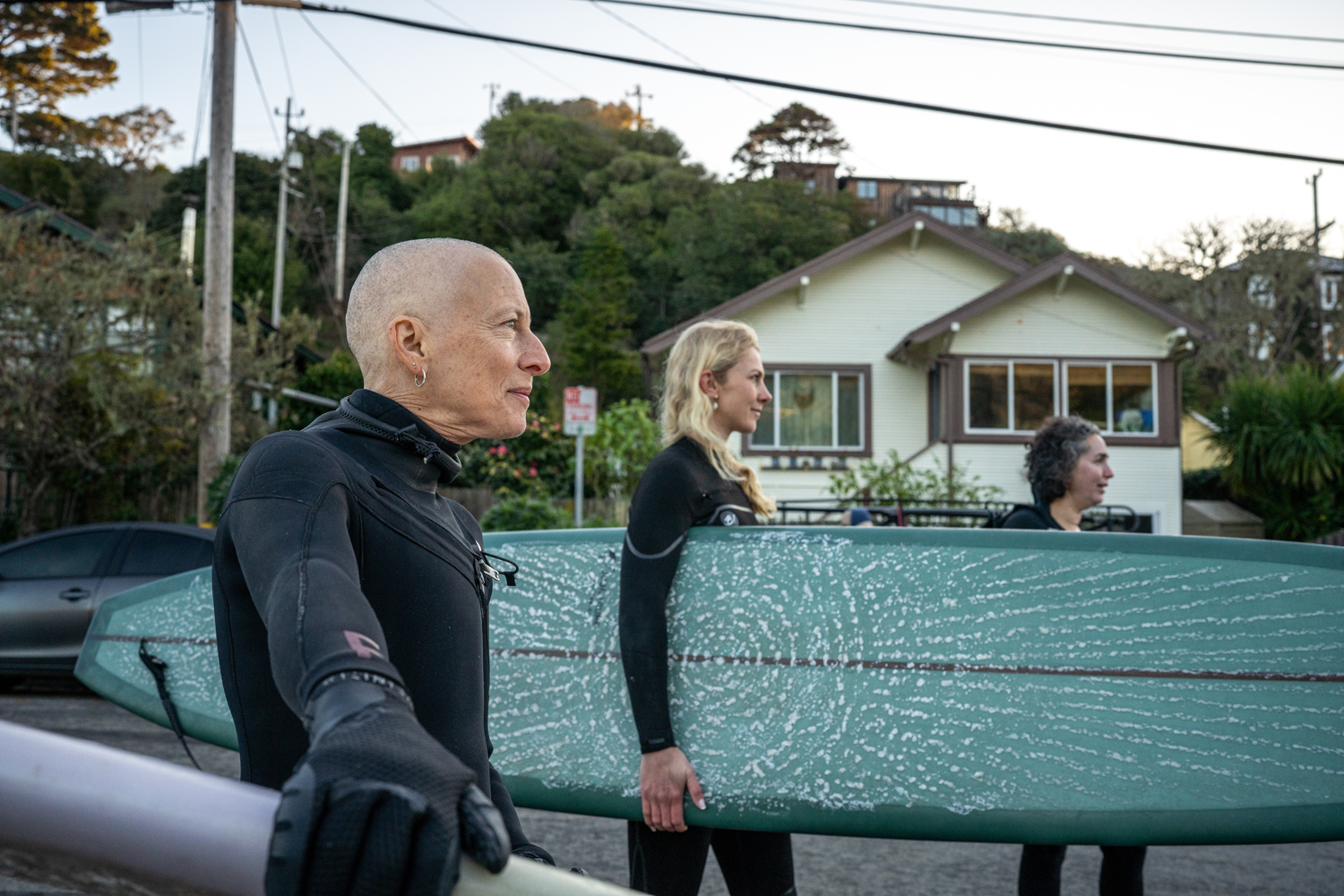
Photo by Matthew Berridge
Since then, she’s looked at the effect of both aerobic exercise and resistance training in multiple cancers. Whether for quality of life, pain, or fatigue, or for physical fitness and strength even before treatment begins, she says, “exercise works across the board.”
The important thing is to find an activity you like, and to be consistent, Dieli-Conwright says. “Exercise is really the secret sauce—and it’s not that much of a secret,” she says. For cancer survivors looking for a similar connection to community and the outdoors, dragon boat paddling has been well studied in breast cancer survivors, says Dieli-Conwright, with findings including reduced lymphedema, improved social support, and improved body image. But any form of exercise that a person enjoys and will stick with can help. She suggests that those looking for support around exercise can see whether their hospital or care center has an exercise program for cancer survivors, and find cancer and exercise resources through the American College of Sports Medicine.
Getting Back on the Board
Cass had no question about what she wanted to focus on. In October 2025, she underwent a double mastectomy, choosing to forgo reconstructive surgery, in part to help her surf sooner and more comfortably. Once she was cleared to exercise, she worked with her surgeon and her physical therapist to incrementally increase her activity to get her back in the water as soon as possible. She started by walking 15 minutes a day, then slowly extended the distance, along with doing exercises to maintain her upper body mobility and strength.
She enlisted everyone on her health care team in her quest. At her first chemotherapy session, in early December 2025, she talked with her nurse about her love of surfing. He advised Cass to keep moving once she got home after her infusion instead of sitting on the couch.
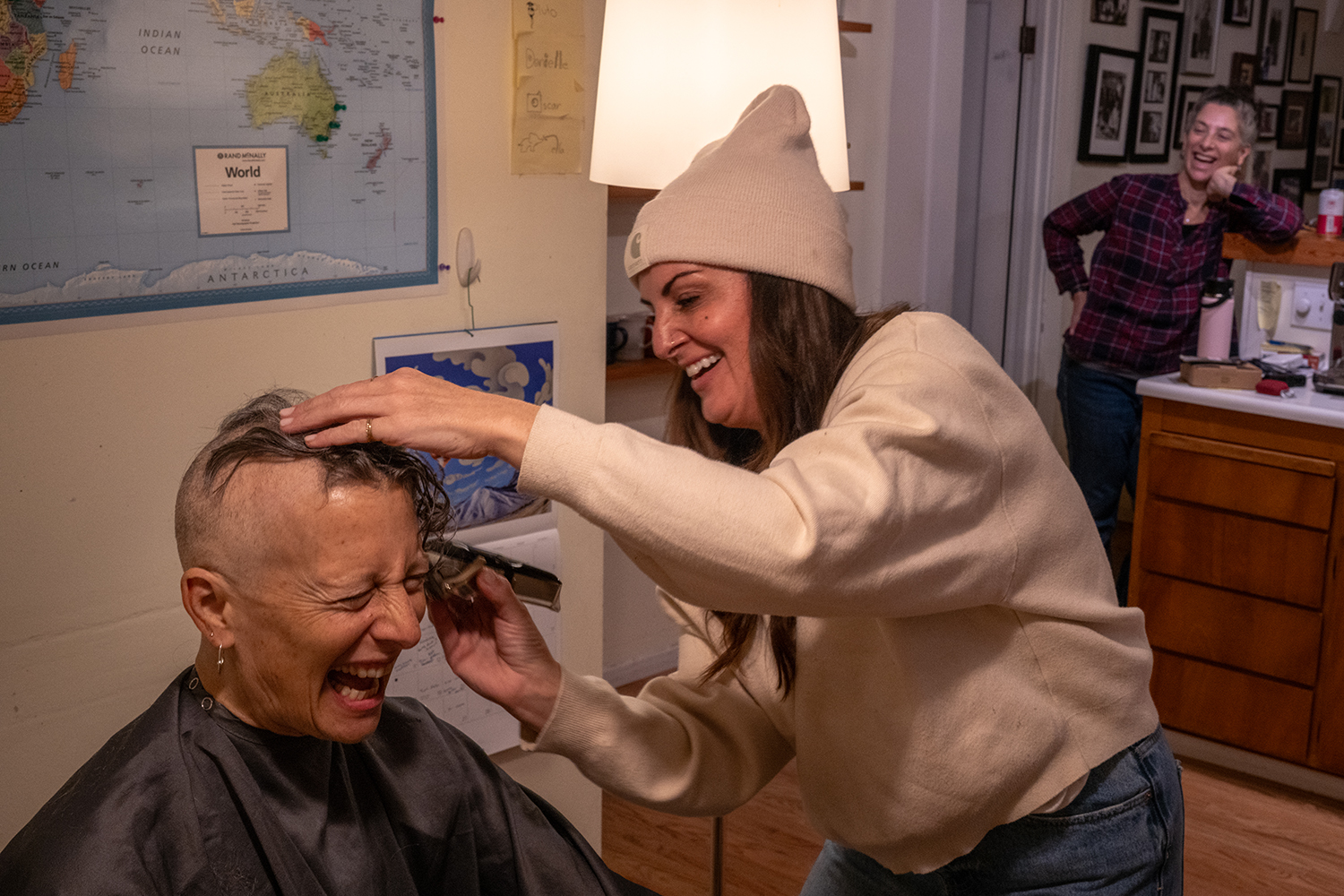
Photo by Matthew Berridge
For Cass, moving paid off. In her breast cancer support group, many women in her cohort had symptoms like lymphedema and cording—the development of thick cord-like scar tissue that can be painful or limit movement—weeks after their surgery; some couldn’t lift their arms. On Dec.12, three days after her first of 12 infusions of Taxol (paclitaxel), Cass got the good news: Her surgeon said she could resume surfing. She called her oncologist’s office and started driving to the beach. On the way, she got an enthusiastic voicemail in response, giving her the green light to surf. She pulled on her wetsuit and paddled out into the lineup.
The surfers in her community have been essential to her recovery: driving her to the beach as she regained strength, cheering her on in the water, and providing a buddy to paddle with her if she got tired and needed to head back to the beach.
After Cass finished her chemo in late February, she continued on the monoclonal antibody Herceptin (trastuzumab), which she had been receiving every third week with her Taxol treatment; her last dose of Herceptin will be during Thanksgiving week, 2026. She will also be on estrogen-blocker anastrozole for the next five years to prevent recurrence.
And regular doses of surfing will be part of her continued treatment, too. “Getting cancer is one of the most disempowering feelings in the world. You feel so helpless,” Cass says. “And one way to regain agency in your life and to feel like more empowered is to move your body.”
Cancer Today magazine is free to cancer patients, survivors and caregivers who live in the U.S. Subscribe here to receive four issues per year.