
-
 Amanda Peet Discusses Her Lobular Breast Cancer Diagnosis
The ‘Your Friends & Neighbors’ actress explains how her diagnosis challenged many of her assumptions about breast cancer.
by Darlene Dobkowski
-

Survivor Profile
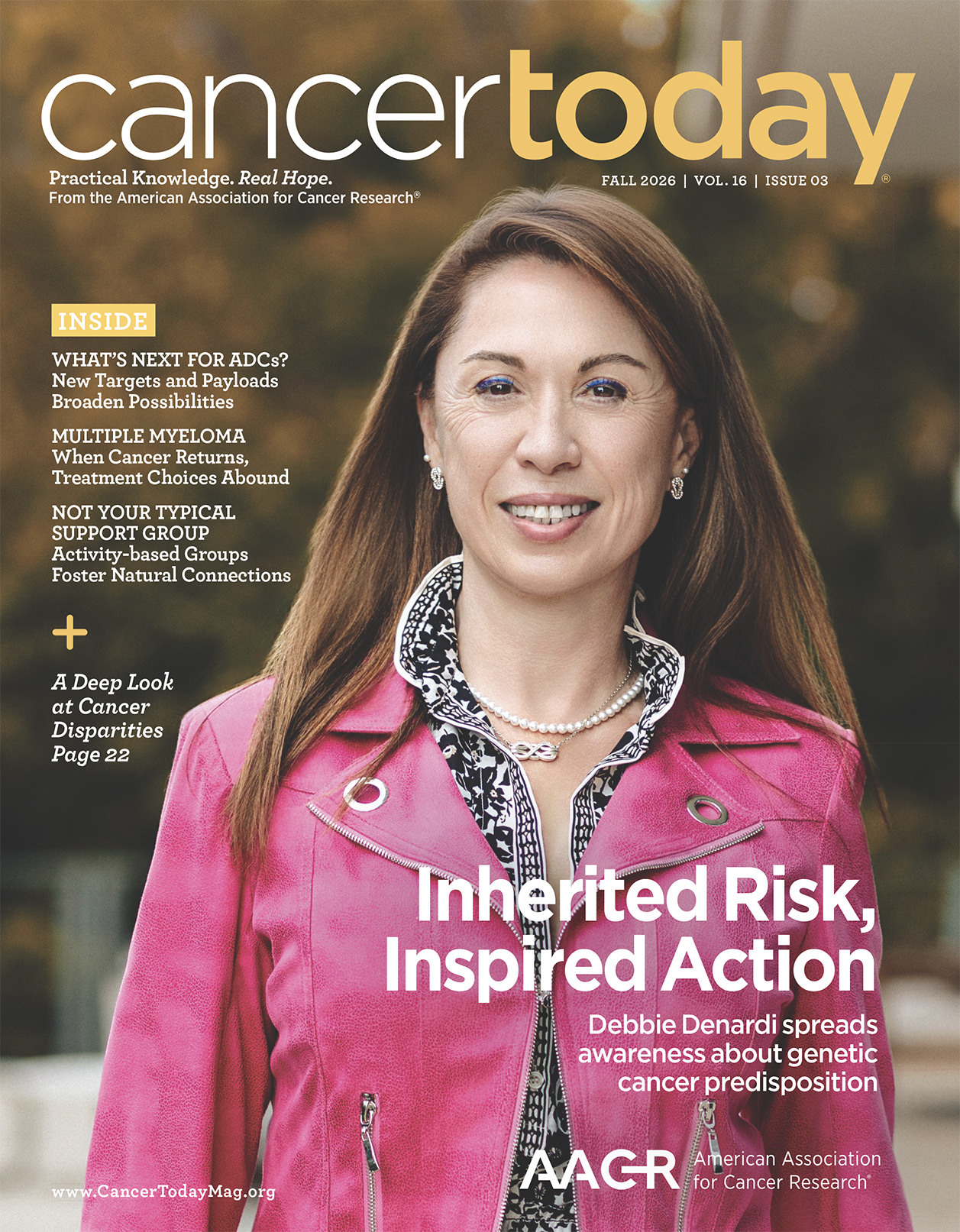
A Legacy of ActionDebbie Denardi, a breast cancer survivor who inherited two genetic mutations that increase her chances of developing cancer, educates others about the value of genetic testing.
by Eric Fitzsimmons
-
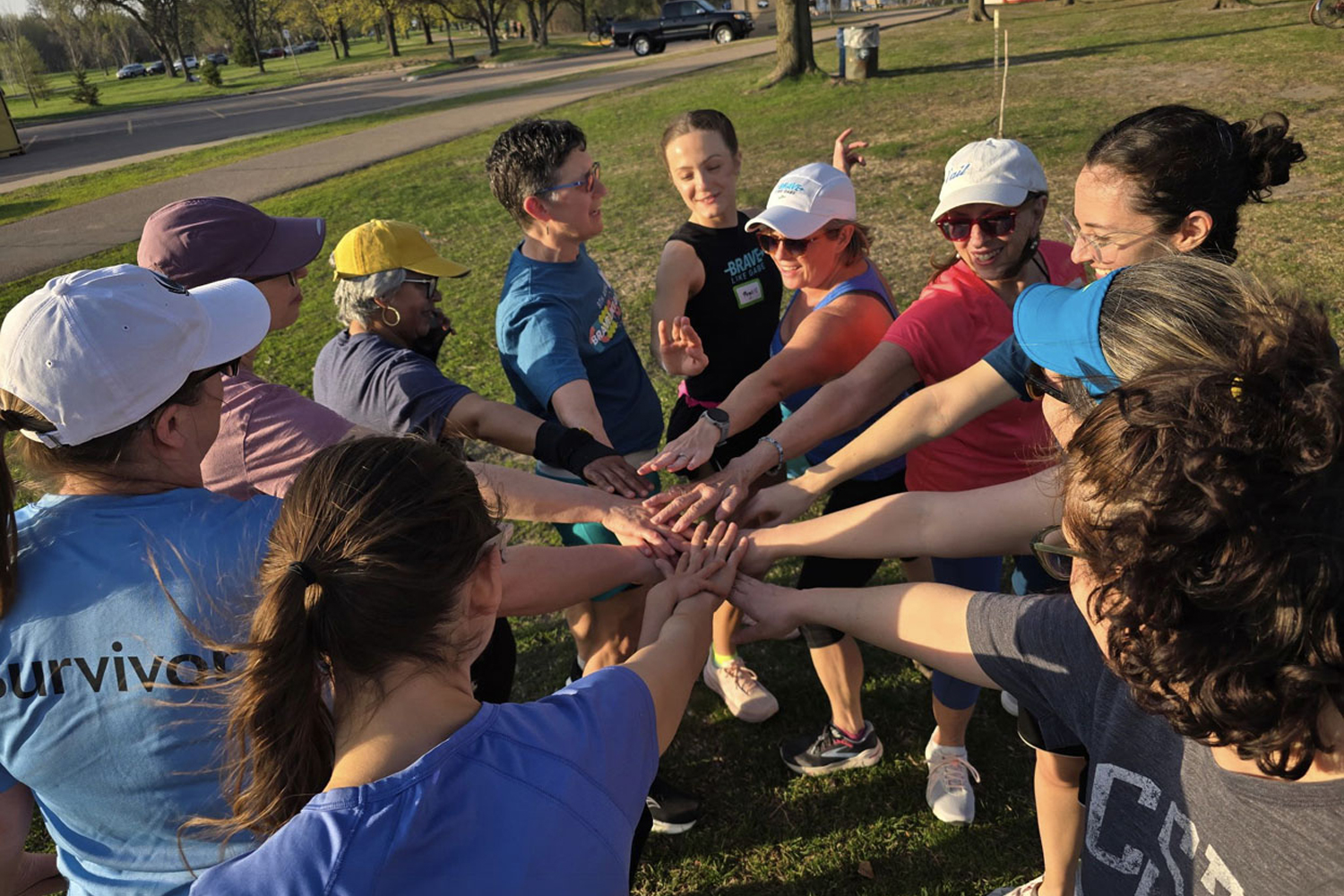
 The Strength of Shared Connection
Organizations centered around group activities offer people with cancer a way to bond with other survivors and move forward after treatment.
by Thomas Celona
-

Sound Advice
How Should I Tell Someone I’m Dating That I Have Cancer?Here’s guidance on approaching the conversation with clarity, confidence and care.
-

Sound Advice
Can Vocational Rehabilitation Benefit People With Cancer?Specialists can help if treatment side effects impair your ability to work.
-

Sound Advice
What Can Cancer Caregivers Do to Reduce Stress?Taking time for yourself and delegating caregiving duties can help alleviate stress.
-

Survivor Profile
The Ripple EffectProstate cancer survivor Robert Ginyard urges other Black men to share their stories and enroll in clinical trials to increase representation and improve outcomes for future generations.
by Brittany King
-
 A Shared Path Toward Cancer Progress
The AACR Scientist↔Survivor Program equips advocates with the scientific knowledge to share new research with patients in their own communities.
by Darlene Dobkowski
-

Survivor Profile
Surviving After ‘Survivor’Ethan Zohn, who won the reality television series ‘Survivor: Africa’ in 2001, used an athlete’s mindset to get through lymphoma treatment twice. He now promotes exercise as an important part of cancer care.
by Darlene Dobkowski
-

Survivor Profile
A Newfound PurposeRectal cancer survivor Manju George draws on her scientific training to help people with colorectal cancer understand their care options.
by Beth Fand Incollingo
The ‘Your Friends & Neighbors’ actress explains how her diagnosis challenged many of her assumptions about breast cancer.
by Darlene Dobkowski
Why I Participated in a Clinical TrialWhen doctors told Yvonne McLean Florence she was eligible to participate in a research trial testing an experimental drug, she joined. She wants more people to have the same opportunity.
by Yvonne McLean Florence
Targeted Therapy Improves Pancreatic Cancer SurvivalA recently approved drug that targets RAS proteins meaningfully improves outcomes for people with this difficult-to-treat cancer.
by Sandra Gordon
Bring On the WavesA surfer’s love for the ocean guides her through breast cancer treatment and beyond.
by Cameron Walker
-
 AACR OMB Statement and Call to Action
The AACR is deeply concerned that proposed OMB regulations would disrupt federal research grant giving, severely weakening a program that has supported American medical innovation for decades.
-
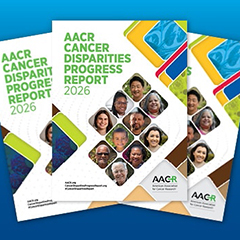 AACR Cancer Disparities Progress Report
The AACR Cancer Disparities Progress Report 2026 highlights recent progress in reducing cancer disparities and emphasizes the continued need for transformative research.
Cancer Research at a Crossroads
