
-
 Supporting Survivors
Panel of experts discuss survivorship challenges and potential areas for study.
by Marci A. Landsmann
-
 A New Type of Drug Approval
At the AACR Annual Meeting, researchers and regulators discuss what it means to tie approval of an immunotherapy to tumors' molecular characteristics, not to their tissues of origin.
by Kate Yandell
-
 Artificial Intelligence Characterizes Cancer
At the AACR Annual Meeting 2018, researchers at Google compared the speed and accuracy of human pathologists and computer algorithms in diagnosing and grading cancer.
by Kevin McLaughlin
-
 Non–Small Cell Lung Cancer Takes Center Stage
A trio of clinical trials at the AACR Annual Meeting spotlight new avenues for non-small cell lung cancer treatment.
by Brad Jones
-
 Cancer Researchers Offer Reasons for Optimism
Cancer researchers and patient advocates spoke about progress against cancer at a public education forum sponsored by the American Association for Cancer Research.
by Kevin McLaughlin
-
 Pembrolizumab Shows Further Promise for Melanoma
In a phase III clinical trial, pembrolizumab yielded a 75.4 percent recurrence-free survival rate after 12 months among patients whose stage III melanoma tumors had been fully resected.
by Brad Jones
-
 The Evolving Role of Patient Advocacy
AACR’s Scientist↔Survivor Program marks a milestone as patient advocates continue to shape research and policy.
by Marci A. Landsmann
-
 An Advocate’s Guide to Attending Scientific Meetings
Two graduates of the AACR Scientist↔Survivor Program share tips for getting the most out of large scientific conferences.
by Bob Riter and Carole Baas
-
 Making Decisions About Breast Surgery
Patients who opt for breast reconstruction after mastectomy tend to overestimate how happy they will be with the results, while those who do not get reconstruction tend to underestimate their future satisfaction.
by Cici Zhang
-
 A Better Way to Screen for Lynch Syndrome?
Researchers say a next-generation sequencing test could improve screening in colorectal cancer patients for a hereditary syndrome that raises cancer risk. Some experts have concerns.
by Cheryl Platzman Weinstock
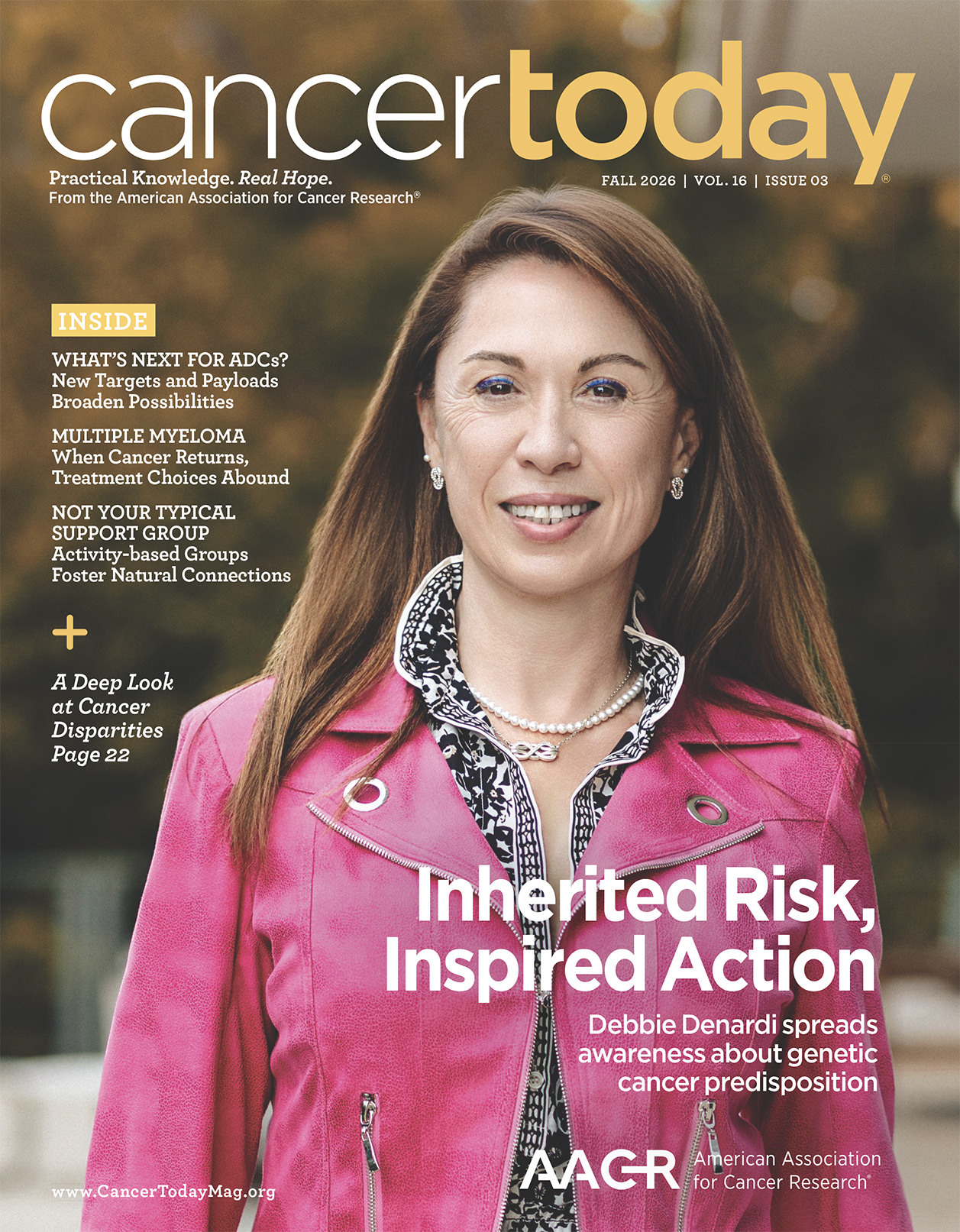
When doctors told Yvonne McLean Florence she was eligible to participate in a research trial testing an experimental drug, she joined. She wants more people to have the same opportunity.
by Yvonne McLean Florence
Targeted Therapy Improves Pancreatic Cancer SurvivalA recently approved drug that targets RAS proteins meaningfully improves outcomes for people with this difficult-to-treat cancer.
by Sandra Gordon
Bring On the WavesA surfer’s love for the ocean guides her through breast cancer treatment and beyond.
by Cameron Walker
Does Exercise Benefit Children With Cancer?New guidelines recommend children and adolescents with cancer get regular physical activity to mitigate side effects from treatment.
by Erin O’Donnell
-
 AACR OMB Statement and Call to Action
The AACR is deeply concerned that proposed OMB regulations would disrupt federal research grant giving, severely weakening a program that has supported American medical innovation for decades.
-
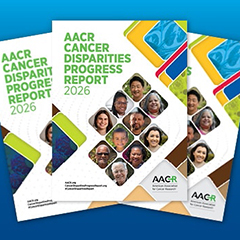 AACR Cancer Disparities Progress Report
The AACR Cancer Disparities Progress Report 2026 highlights recent progress in reducing cancer disparities and emphasizes the continued need for transformative research.
Cancer Research at a Crossroads
