
WHEN CRISTINA POZO-KADERMAN was a toddler, her mother was diagnosed with head and neck cancer at age 26. For as long as she can remember, Pozo-Kaderman knew she wanted to help other people impacted by the disease and their families. She became a clinical psychologist and for more than 30 years has helped young people with cancer process their emotions.
Pozo-Kaderman, now the head of the Young Adult Program at Dana-Farber Cancer Institute in Boston, notes adults younger than 50 face different challenges than older patients. They may have to navigate their diagnosis while completing school, beginning their careers, dating or starting families of their own. They are more likely to experience financial toxicity, and the disease and treatment often leave them with subsequent health problems, such as heart disease and fatigue, that they must manage for decades.
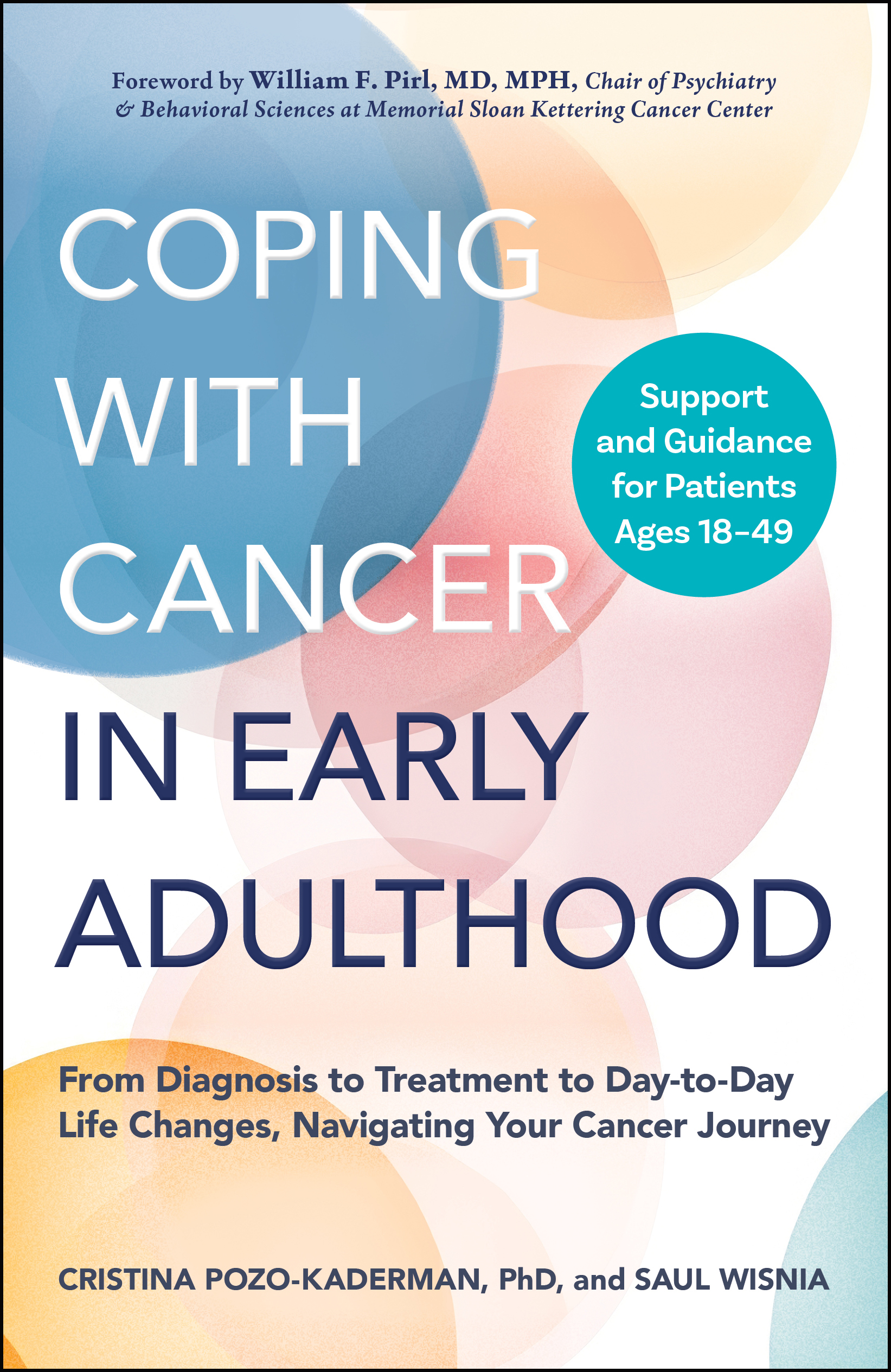
To help address the unique physical and mental health needs of young adults diagnosed with cancer, Pozo-Kaderman teamed up with Saul Wisnia, an editor and writer at Dana-Farber, to write Coping With Cancer in Early Adulthood, which was published in October 2025.
The book emphasizes topics of particular importance to young adults: maintaining friendships, raising children, dealing with financial toxicity, improving sexual health and managing stress. Oncologists focus so intently on treating the disease that they frequently overlook these concerns, Pozo-Kaderman says, so the book aims to help fill in those gaps with practical tips for navigating day-to-day challenges.
Lung cancer survivor Aurora Lucas uses social media to highlight the unique needs of young adult cancer survivors.
For example, one chapter addresses how a young adult with cancer can disclose their diagnosis to family and friends without adding to their stress. The chapter starts with a vignette about a young woman with breast cancer whose family and friends inundated her with calls and texts. All the well-meaning messages left her feeling emotionally exhausted. To deal with situations like this, the authors provide wording for an email telling friends about a diagnosis and recommend online platforms that patients can use to communicate health updates.
Pozo-Kaderman says she hopes the book will give readers actionable steps that can help them cope with their diagnosis. “Getting diagnosed with cancer in early adulthood is challenging. It’s difficult. It can be painful,” she says. “But there are also strategies and ways that you can help yourself through that time to make, in some ways, the unbearable more bearable.”
Pozo-Kaderman spoke with Cancer Today about how young adults with cancer can learn to get the support they need.
CT: Why is there an increasing need for information about cancer in young adults?
POZO-KADERMAN: There have always been young adults who were diagnosed with cancer, but there has been this trend of more young adults getting diagnosed with cancers that typically develop later in life. Lung, colorectal, pancreatic and breast cancers and melanoma typically were diagnosed when people were in their 50s, 60s, 70s or later. Now, we’re having more young people get diagnosed. We don’t know why. We suspect there’s probably some genetic variables, an environmental component and lifestyle factors, but we just don’t know.
CT: Why is understanding and accepting emotions so necessary for young adults diagnosed with cancer?
POZO-KADERMAN: Acknowledging what you’re feeling is important because when you hear the words “You have cancer,” you have an emotional response to it. How could you not? Young adults often wonder: “Is it OK that I’m feeling scared? Is it OK that I’m really angry? Is it OK that I’m sad? Is it OK that I feel all those feelings, sometimes all at the same time?” Being able to normalize that and validate that it’s OK to feel this way is crucial.
Also, there’s a lot of toxic positivity out there—the thought that you need to stay positive all the time. People will often say, “You’re lucky you got the good cancer,” or “Everything happens for a reason.” The person may not mean to do this, but basically what they’re saying is, “The full range of human emotions you are feeling—sadness, anger, fear—is not valid. We just want you to focus on these positive emotions and push everything else aside.” And that’s not normal. We’re human beings. Of course we’re going to feel this range of emotions. Allowing yourself to be a human being and feel it all is natural and normal.
The next step, though, is: How do you cope with that? Everybody copes differently. Some people want to talk about their emotions, and they cope by going to a mental health provider or attending a support group. But other people don’t necessarily want to talk about it, and that is OK. One of my patients found that yoga, meditation and dance were her strategies for coping. There is no right or wrong way. What’s important is that young adults with cancer get the support they need.
CT: Why can transitioning to posttreatment life be so difficult, especially for young adults?
POZO-KADERMAN: The reason it’s so difficult is because nobody is prepared for it. They expect that as soon as treatment is over, they’re just going to be fine within a month. Additionally, they’ve already missed out, so there’s that need to catch up and really live life. The idea that they’re not just going to bounce back immediately is a harsh reality. I tell people, “If you lost your hair, it doesn’t grow back quickly. That’s similar to what’s going on inside your body. Give it time to recover.”
The other thing that’s really hard is fear of cancer recurrence. In some studies, fear of cancer recurrence seems to be more pronounced for young adults, and they also worry more about getting a second cancer. During treatment, they feel they’re doing something to actively combat the cancer. Now, they think they should still be doing something to prevent cancer.
Some fear of cancer recurrence is normal. But for some people, it doesn’t just show up in the few days before going back for blood work or scans. It starts to consume them. The book talks about different strategies that you can implement to help yourself during this time, such as mindful meditation or exercise.
This interview has been edited and condensed for clarity.
Cancer Today magazine is free to cancer patients, survivors and caregivers who live in the U.S. Subscribe here to receive four issues per year.