
-
 The Return to Work
What happens if your workplace reopens before you're ready to return or you're an essential worker? For some people who have been diagnosed with cancer, accommodations may be possible.
by Jen Tota McGivney
-
 Parking Costs Take a Hidden Toll on Cancer Patients
People with cancer can pay significant costs for parking at cancer centers while receiving their treatment, a study finds.
by Marcus A. Banks
-
 A Modern Family
My diagnosis with colorectal cancer at age 32 affected my fertility. As a result of my experiences, I help others who have been diagnosed with cancer understand their choices related to fertility preservation and their options for becoming a parent.
by Allison Rosen
-
 Treating Cancer Patients With COVID-19: A New York City Experience
An analysis of cancer patients who were infected with the coronavirus and treated at Memorial Sloan Kettering Cancer Center in New York City suggests certain risk factors may predict more severe COVID-19.
by Anna Azvolinsky
-
 What is a Super Responder?
Researchers are investigating why certain patients have an exceptional response to a particular drug.
by Bradley Jones
-
 Why Are Early-Onset Cancers Rising?
Some cancers that are most commonly diagnosed in older adults are becoming increasingly prevalent in young adults.
by Kate Yandell
-
 COVID-19 Exposes Health Inequities
At a symposium held during a virtual meeting of cancer researchers, panelists discussed the disproportionate impact COVID-19 has had on Black and Latino Americans, as well as members of other minority groups.
by Kevin McLaughlin
-
 Pediatric Oncologists Underestimate Needs of Minority Parents
Research describes how communication gaps can shift extra burden to parents who are members of ethnic and racial minority groups.
by Marci A. Landsmann
-
 Pushing Progress Forward
NCI Director Norman E. “Ned” Sharpless addresses disparities and maps out plans for the future amid “profound upheaval.”
by Kevin McLaughlin
-
 Cancer and Older Adults: Can Oncologists Do Better?
Geriatric assessment reduces toxicity from treatment and improves quality of life in older adults with cancer.
by Marci A. Landsmann
A recently approved drug that targets RAS proteins meaningfully improves outcomes for people with this difficult-to-treat cancer.
by Sandra Gordon
Bring On the WavesA surfer’s love for the ocean guides her through breast cancer treatment and beyond.
by Cameron Walker
Does Exercise Benefit Children With Cancer?New guidelines recommend children and adolescents with cancer get regular physical activity to mitigate side effects from treatment.
by Erin O’Donnell
Can the CYP2D6 Gene Affect Tamoxifen’s Effectiveness?A recent analysis examined whether CYP2D6 metabolism influences tamoxifen response. The answer isn’t entirely clear.
by Ashley P. Taylor
-
 AACR OMB Statement and Call to Action
The AACR is deeply concerned that proposed OMB regulations would disrupt federal research grant giving, severely weakening a program that has supported American medical innovation for decades.
-
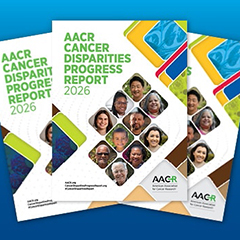 AACR Cancer Disparities Progress Report
The AACR Cancer Disparities Progress Report 2026 highlights recent progress in reducing cancer disparities and emphasizes the continued need for transformative research.
Cancer Research at a Crossroads
