Every week, the editors of Cancer Today magazine bring you the top news for cancer patients from around the internet. Stay up to date with the latest in cancer research and care by subscribing to our e-newsletter.
HER2-targeted Therapy Approved for Early-stage Breast Cancer
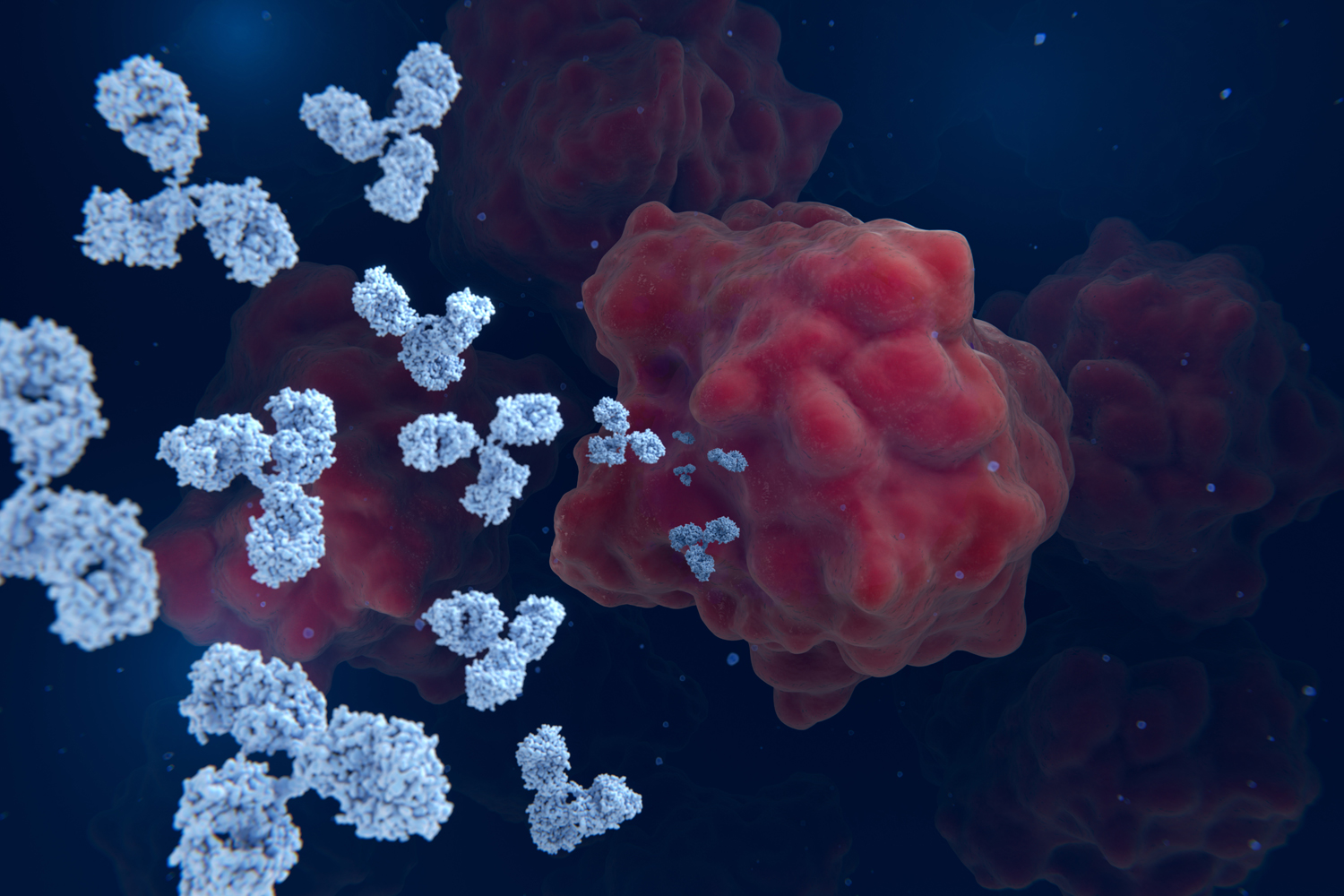
The Food and Drug Administration (FDA) approved Enhertu (trastuzumab deruxtecan) for two separate uses in adults with early-stage HER2-positive breast cancer, marking the first time Enhertu has been approved for early-stage disease, Oncology News Central reported. Enhertu is an antibody-drug conjugate that uses an HER2-targeting antibody to deliver a chemotherapy to cancer cells that express the HER2 protein. The FDA initially approved Enhertu in 2019 to treat people with metastatic HER2-positive breast cancer who had already received two HER2-targeted treatments. Since then, the FDA has expanded these indications for several other HER2-positive advanced or metastatic cancers, including for people with breast cancer with lower expression of the HER2 protein. One of the new indications is for people with stage II or III HER2-positive breast cancer to receive Enhertu before surgery. In this neoadjuvant setting, patients can receive Enhertu every three weeks for four cycles followed by the HER2-targeted therapy combination of trastuzumab and Perjeta (pertuzumab) with taxane chemotherapy. The second indication is for people with early-stage HER2-postive breast cancer who still have residual disease at the time of surgery, following a regimen of HER2-targeted therapy and chemotherapy. The approval was based on a study, published Dec. 10, 2025, in the New England Journal of Medicine, that compared Enhertu with another antibody-drug conjugate already approved in early-stage breast cancer called Kadcyla (trastuzumab emtansine) in people with residual disease at surgery. In the phase III clinical trial, 92.4% of people taking Enhertu were alive without cancer at three years, compared with 83.7% of people given Kadcyla. “The neoadjuvant setting offers the earliest opportunity to improve outcomes, while the adjuvant setting provides another important chance to prevent recurrence for patients with residual disease after surgery,” Shanu Modi, a breast medical oncologist at Memorial Sloan Kettering Cancer Center in New York City, said in a press release. Modi was an author on a study published Oct. 21, 2025, in the Annals of Oncology—and also cited in the FDA approval—that found giving Enhertu as neoadjuvant therapy led to fewer people with residual cancer when they underwent surgery compared with chemotherapy. “These two new indications in HER2-positive early breast cancer will evolve how we treat patients in these settings and support trastuzumab deruxtecan as a potential new standard of care in early-stage disease,” Modi said.
Preventing Blood Clots Linked to Better Outcomes in People With Cancer
People with cancer at high risk for developing blood clots who received preventive blood-thinning medications were less likely to develop a blood clot or to die six months after they were assessed for blood clot risk, according to a study published in JCO Oncology Practice. The retrospective analysis looked at outcomes from 2,325 people treated for various cancers at the University of Vermont Cancer Center in Burlington, which has a program to screen patients for high risk of developing cancer-related blood clots. Of the people screened, 573 were identified as having a high risk for blood clots, and 59% of this group received an anticoagulant to prevent blood clots. The study found 3.2% of people who received preventive treatment developed a clot within six months of the center assessing their clot risk, compared with 7.7% of people at high risk for blood clots who did not receive preventive anticoagulant treatment. Additionally, 31.3% of those who did not receive preventive anticoagulants died within six months of being assessed for blood clot risk compared with 16.8% of the preventive treatment group. Oncologists are often concerned that anticoagulants will increase a cancer patient’s risk of bleeding issues, according to Chris E. Holmes, a hematologist at the University of Vermont Cancer Center and a study author. “What is great about this study is that we were able to disprove that myth,” Holmes said in an article in Healio. “Whether the magnitude of the improved mortality holds up, we’re not sure, we need more studies to look at that, but what we were able to be very clear about is that the mortality is not [negatively] impacted.”
ADHD Medications May Reduce Cancer-related Fatigue
Two drugs commonly used to treat attention-deficit/hyperactivity disorder (ADHD) may help relieve cancer-related fatigue, according to a study published in the Journal of the National Comprehensive Cancer Network. Researchers analyzed results from nine randomized controlled clinical trials that assessed whether the drugs methylphenidate and dexmethylphenidate, commonly known by the brand names Ritalin and Focalin, could relieve cancer-related fatigue, the ASCO Post reported. The analysis combined data from 823 people: 410 received one of the treatments, and the remaining 413 received a placebo. Researchers found people who received either of the drugs had an average improved fatigue score of 2.43 points compared with the placebo group. “For people dealing with a symptom that can be profoundly disabling, that is a meaningful contribution,” Bruno Almeida Costa, a hematology-oncology fellow at the University of Texas MD Anderson Cancer Center in Houston and a study author, said in a press release. The effects took about five weeks to make a noticeable difference, the analysis suggested. Costa noted other routines that have been shown to help reduce fatigue—including exercise, cognitive behavioral therapy and mind-body practices—may take even longer to deliver an effect, and these drugs could be a bridge to help people in the near term. “I would encourage cancer care professionals to think of methylphenidate as one piece of a broader approach to managing fatigue, not as a standalone solution,” Costa said.
Cancer Today magazine is free to cancer patients, survivors and caregivers who live in the U.S. Subscribe here to receive four issues per year.