
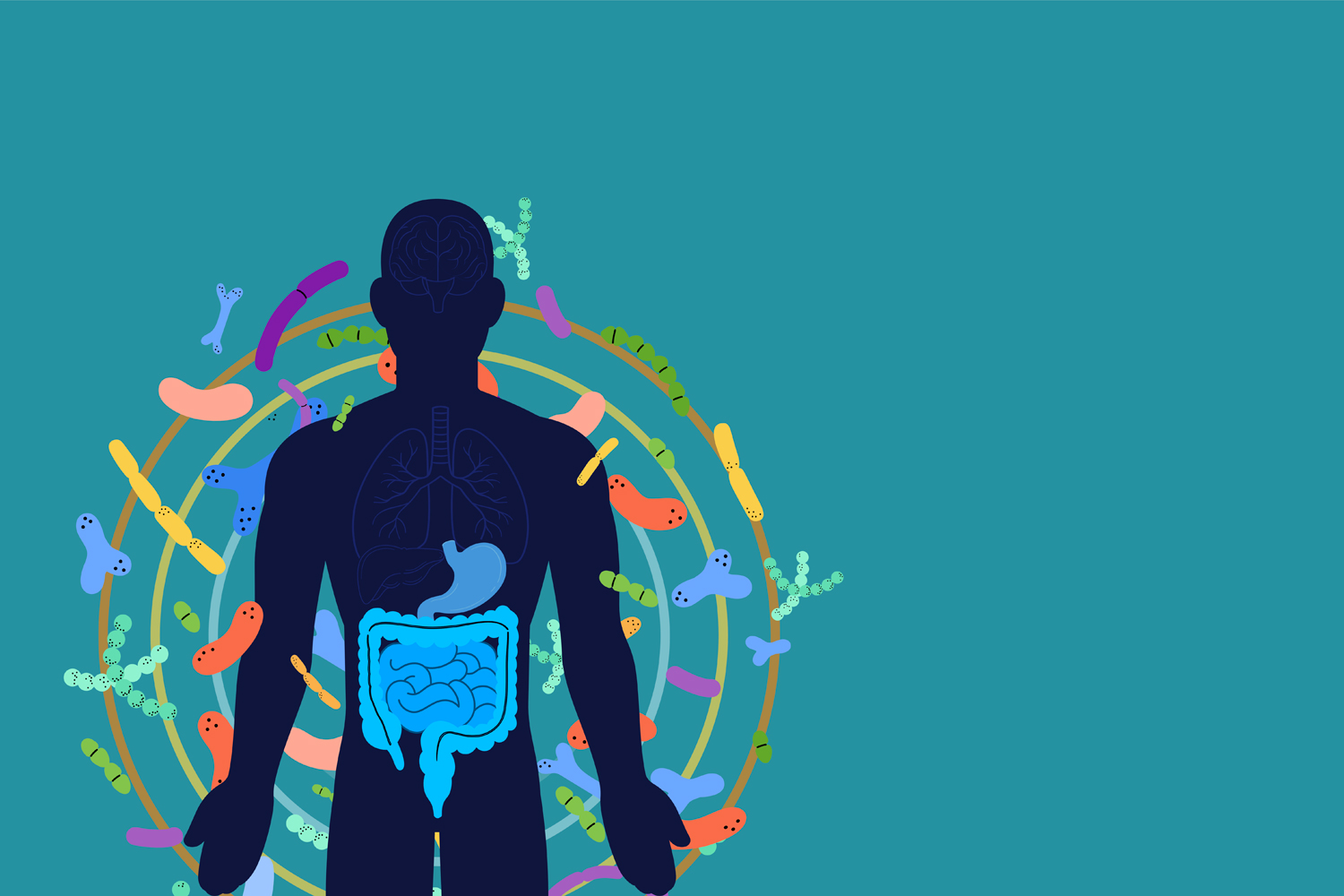
WE LIVE IN BALANCE WITH trillions of bacteria, viruses and fungi that reside in our bodies. The body’s microbial population, known as the microbiome, is practically its own organ, accounting for an estimated 2.5 pounds of a person’s body weight.
Some 95% of these tiny creatures live in the digestive tract, especially in the colon and the rest of the large intestine. These resident bugs have many jobs. The microbes help digest food, breaking down fiber and complex carbohydrates into metabolites that serve different functions in the body. This miniature ecosystem strengthens the gut lining, quells inflammation, promotes healing and supports immune function throughout the body.
“Those metabolites can actually change how our immune cells function,” says Jennifer Wargo, a surgical oncologist and researcher at the University of Texas MD Anderson Cancer Center in Houston.
Studies show that people with various cancers have distinctly different gut microbiomes from those of people without cancer—and the composition of these microorganisms also seems to correlate with treatment response, especially to drugs called immune checkpoint inhibitors, which help to release the brakes on the immune system.
What Is a Healthy Gut?
Balance is a key component of a healthy microbiome. A healthy gut microbiome contains many different species of microorganisms that perform many of the same jobs. This “functional redundancy” allows important biological processes to continue even when some species decrease or increase, Wargo says. Too many of the same kind of microorganism can crowd out others and impair these functions.
A 2018 study from Wargo’s lab, which was published in Science, showed people with melanoma who had diverse microbiomes were more likely to respond to immune checkpoint inhibitors than those whose microbiomes had less diversity. The scientists assessed microbiota composition using fecal samples from people with advanced melanoma before patients started treatment. As part of the same study, researchers transplanted the fecal microbiota from people who responded to treatment to mice with tumors. After the transplant, the mice had improved tumor control and enhanced response to immunotherapy.
In a separate study published in the same issue of Science that examined people with advanced non-small cell lung cancer and kidney cancer, researchers found that specific bacterial species, particularly Akkermansia muciniphila, were associated with better responses to immune checkpoint inhibitors. The study also showed those who used antibiotics, which wipe out both good and bad bacteria, had poorer response and survival. In addition, mice exposed to antibiotics had impaired response to immunotherapy, but oral supplementation with Akkermansia muciniphila restored their treatment response.
In other small observational studies of people with melanoma, non-small cell lung cancer and kidney cancer who received immune checkpoint inhibitors, researchers have found certain gut bacteria, such as Faecalibacterium species, are more abundant in those who respond to immune checkpoint inhibitors. In addition, higher levels of certain Bacteroides species have been associated with a lack of treatment response.
Not One Size Fits All
While these findings are intriguing, scientists have yet to find the “right” formula that could signal better treatment response. Certain bacterial species that are associated with treatment response in some cancers may have the opposite effect in other cancers. Furthermore, the bacteria strains that appear to boost response to immune checkpoint inhibitors that target PD-1, such as Keytruda (pembrolizumab) and Opdivo (nivolumab), are different from bacteria strains associated with improved response to CTLA-4 inhibitors, like Yervoy (ipilimumab). In addition, some bacteria that are associated with an improved immunotherapy response may also be associated with greater side effects from treatment.
Many cancer patients are treated with medications that allow the immune system to attack cancer cells.
Immune checkpoint inhibitors block inhibitory molecules on T cells and cancer cells that limit immune response. Drugs such as Keytruda (pembrolizumab) and Opdivo (nivolumab) block PD-1 on T cells, while Yervoy (ipilimumab) blocks CTLA-4. This inhibition lifts the brakes on the immune system, which allows the immune system to recognize and attack cancer cells.
Immune checkpoint inhibitors are more likely to work in certain cancers, such as melanoma, non-small cell lung cancer, and cancers of the bladder, head and neck, kidney, and liver. These types of cancers are considered hot, meaning they are heavily infiltrated by immune cells. These tumors also tend to have more mutations in the tumor genome, making it easier for the immune system to recognize them. It’s in these hot cancers that the gut microbiome exerts the strongest influence, says Jennifer Wargo, a surgical oncologist and researcher at the University of Texas MD Anderson Cancer Center in Houston.
Although knowledge about specific species is growing, “we don’t yet have a really strong understanding of what each and every one of those bacteria are doing and how they work in concert with one another,” says Joshua Fein, a hematologist-oncologist at Weill Cornell Medicine in New York City.
Researchers have identified certain features that are associated with poor responses. Microbes that are gram-negative—which means they have an outer lay of sugar chains made of lipopolysaccharides—can stimulate strong immune activation. “[These bacteria] may be creating a lot of inflammation,” Wargo says. This seems to be associated with poorer treatment response and increased side effects.
On the other hand, research suggests people who have greater amounts of fiber-fermenting microbes in their guts tend to have more diverse microbiomes. These types of microbes process short-chain fatty acids (SCFAs), metabolites that are linked to lower inflammation. More SCFAs in the gut also appear to protect the gut lining and boost the efficacy of some kinds of immune checkpoint inhibitors and cellular therapies.
What You Eat Matters
Despite the complexity of the gut microbiome, evidence suggests that diet can be a powerful way to improve the composition of the gut. People who eat a fiber-rich diet tend to have more diverse gut microbial populations—which reinforces some proverbial advice. “Food is medicine,” Wargo says. “You can have the same bugs in your gut, and if you’re feeding them a nice colorful plate with a lot of fiber, they’re going to function like gangbusters.”
In a 2021 study co-led by Wargo and published in Science, people with advanced melanoma who reported eating 20 grams or more of fiber from whole foods each day were significantly more likely to respond to immune checkpoint inhibitors than people who ate less fiber. High-fiber consumers also survived longer without disease progression. The study, which also examined the use of probiotics, found the treatment response was most pronounced for those who got fiber from their diet and were not taking probiotics.
At Fred Hutch Cancer Center in Seattle, diet is a central component of care for people who receive stem cell transplants for blood-related cancers, says Paula Charuhas Macris, a dietitian at Fred Hutch who works with people who have leukemia, lymphoma and multiple myeloma. With stem cell transplants, patients receive intense chemotherapy to destroy any cancer cells and the existing immune cells before they receive entirely new donor cells that act as a new immune system. Rebuilding the gut microbiome through diet helps reset this process, Charuhas Macris says. “We’re really focusing now on a plant-based diet for survivorship—plant foods that contain fiber to help diversify the gut microbiome and other nutrients to reduce cancer risk,” she says.
An ongoing dietary intervention study, called the Diet and Immune Effects Trial (DIET), aims to assess how high-fiber diets impact immunotherapy response in people with melanoma. As part of the study design, participants will receive prepared meals with controlled fiber amounts over a 10-week period. One group will receive high-fiber meals that start with 30 grams per day for one week and build up to 50 grams per day. In the other group, people receive 10 to 20 grams of fiber, which is the estimated average intake for most Americans.
Interim data from 20 patients who enrolled in the trial were presented at the American Society of Clinical Oncology Annual Meeting 2025, held May 30 to June 3 in Chicago. According to the findings, 10 of 13 people in the high-fiber group responded to immunotherapy compared with 2 of 7 people in the control group. Those in the high-fiber group also had fewer immune reactions, with 71.4% experiencing adverse immune events versus 93.3% in the control group.
Harnessing the Microbiome’s Potential
Researchers are applying their knowledge to develop ways to use the microbiome to predict and enhance immunotherapy treatment response.
In a prospective study published Sept. 4, 2025, in Cancer Discovery, researchers analyzed changes to the gut microbiome over the course of treatment in people with B-cell malignancies, which represent a number of blood cancers. Patients received CAR T-cell therapy, a type of personalized immunotherapy that reprograms a patient’s own immune cells to recognize and attack cancer.
Researchers developed a model that predicted CAR T-cell therapy response based on bacterial communities in the gut. All patients whose baseline gut microbiomes included Akkermansia muciniphilaexperienced treatment responses within the first six months, compared with 42% of patients whose microbiomes did not contain this bacterium. However, only about 20% of participants had Akkermansia muciniphila in their gut at the time they started treatment.
What you eat can affect your gut microbiome.
Diets high in ultraprocessed foods, such as sweets, sodas, salty snacks and fast food, are associated with an increased risk of developing several cancer types, including colorectal, breast and pancreatic cancers. These foods account for more than half of the calories consumed by Americans ages 1 and older, according to Centers for Disease Control and Prevention data from 2021 to 2023. Ultraprocessed foods, which are often full of added fat, salt and refined sugars, taste rich and flavorful, but have very little nutritional content.
Research suggests that fiber-rich foods can naturally bolster beneficial bacteria in the gut. The Diet and Immune Effects Trial (DIET) at the University of Texas MD Anderson Cancer Center in Houston provides prepared foods to people with melanoma for 10 weeks during their immunotherapy treatment. The study offers numerous nutritional options for patients, including whole-wheat banana muffins, black bean scrambles, cilantro lime quinoa bowls, sweet potato fries, fruit smoothies with chia seeds, and protein sources, including turkey, chicken and seafood.
The American Institute for Cancer Research (AICR), a nonprofit organization that is focused on the link between diet, nutrition, physical activity, body weight, and cancer risk and survivorship, also shares high-fiber diets recipes, such as avocado deviled eggs, cranberry flax pumpkin bread, or spinach and goat cheese stuffed mushrooms. The AICR recommends that plant foods account for about two-thirds of the average dinner plate to help prevent cancer.
For an easy guide, patients should aim to add a rainbow of colors to their plate, says Paula Charuhas Macris, a dietitian who works with people with cancer at the Fred Hutch Cancer Center in Seattle. Examples might include red tomatoes or strawberries, orange carrots or sweet potatoes, and green chard or broccoli. Beans, lentils, peas, nuts and seeds are also important sources of plant-based fiber and protein, she says.
Other research is exploring the role of probiotics, which are pills or products that contain live beneficial bacteria. In a small study published in 2022 in Nature Medicine that included 30 people with kidney cancer, researchers tested the use of probiotics with immune checkpoint inhibitors. Sixteen participants took an oral capsule containing probiotics called CBM588 along with the immune checkpoint inhibitor Opdivo, and their median progression-free survival was 12.7 months. The 14 people who received immunotherapy alone had a median progression-free survival of 2.5 months.
Wargo warns that over-the-counter probiotics are not regulated in the same way as drugs and that research has yet to show these consumer products can meaningfully change gut composition. In addition, probiotics could interfere with treatment response or increase the risk for infection in people whose cancer treatment compromises their immune systems. “People shouldn’t necessarily be buying and taking probiotics,” Wargo says. “Talking to your treatment team is always the right answer.”
Fecal microbiota transplants (FMTs), medical procedures in which stool from a healthy donor is processed and transferred into the gastrointestinal tract of a patient, are another growing area of study. Hassane M. Zarour, a cancer immunologist at UPMC Hillman Cancer Center in Pittsburgh, led a clinical trial that showed the promise of this approach. The 2021 study, published in Science, looked at 15 people with advanced melanoma who initially did not respond to immunotherapy but received FMTs using microbial bacteria extracted from the stool of melanoma patients who had responded to immunotherapy. After the transplant, 6 of 15 patients had their tumor shrink or stop growing after receiving immunotherapy.
However, FMTs require donor screening, stool collection and processing, and delivery via a colonoscopy, which can make clinical application challenging. “FMT is complex. The process is difficult, and it’s not easy to implement with so many [necessary] controls,” says Zarour.
But researchers are exploring ways to apply what they know about beneficial bacteria to create better ways to potentially feed the gut microbiome. At MD Anderson Cancer Center, scientists are engineering synthetic microbiomes using a mixture of well-characterized bacterial strains that are associated with immunotherapy response, Wargo says. Synthetic versions of these microbial populations could be safer and more scalable than FMT, she says.
The interactions between gut bacteria and the immune system are incredibly complex, and researchers continue to analyze specific strains and populations with the goal of improving treatment response. “All these findings depend on the context of the treatment,” Zarour says. “We need more trials.”
Cancer Today magazine is free to cancer patients, survivors and caregivers who live in the U.S. Subscribe here to receive four issues per year.