

David Zahavi, PhD Photo courtesy of David Zahavi, PhD
IN MAY 2020, 8-year-old Kaley Ihlenfeldt was diagnosed with diffuse midline glioma, an aggressive childhood brain cancer with a grim prognosis. Her parents were told Kaley had nine to 18 months to live, and that traditional treatments would only buy limited time. In their search for options, her parents ultimately enrolled Kaley in a clinical trial for an experimental treatment. The drug, now called Modeyso (dordaviprone), targeted the genetic mutation driving her tumor.
Kaley, now 14, started her freshman year of high school in 2025, while continuing to take the drug twice a week. Approved by the Food and Drug Administration (FDA) on Aug. 6, 2025, Modeyso became the first therapy for recurrent diffuse midline glioma, a development that reflects how sustained cancer research investment can result in lifesaving treatments for children. Recently, Kaley’s cancer returned, underscoring the continued urgent need for research and accelerated drug discovery to develop new therapies for children facing deadly cancers like diffuse midline glioma.
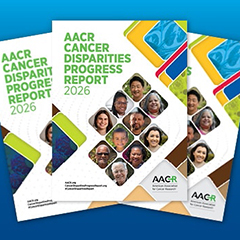
On Dec. 4, 2025, the American Association for Cancer Research (AACR) held a congressional briefing in the Kennedy Caucus Room on Capitol Hill to unveil its first-ever AACR Pediatric Cancer Progress Report to showcase the tremendous research progress achieved against pediatric cancers. During the briefing, researchers, pediatric cancer survivors and their families, patient advocates, government representatives, and policymakers spoke about scientific advances that have impacted pediatric cancer care. They shared stories from survivors like Kaley, and pushed Congress for continued robust federal investment in pediatric cancer research and for policy action to accelerate pediatric drug development.
Underscoring the critical role of the National Cancer Institute (NCI) in these efforts, Anthony Letai, MD, PhD, made his first public appearance as NCI director at the briefing. Dr. Letai highlighted the scientific opportunities arising from research to better understand the biology of pediatric cancer and to develop novel therapies designed specifically for pediatric cancer patients. Rep. Michael McCaul, a longtime champion for pediatric cancer research who was featured in the AACR Pediatric Cancer Progress Report, also provided remarks emphasizing the importance of bipartisan action and continued federal investment in research. He highlighted how federal programs have already helped move promising science closer to the clinic, while stressing that much more remains to be done to meet the challenges faced by children with cancer.
During the briefing, AACR Chief Executive Officer Margaret Foti, PhD, MD (hc), called on the Senate to pass the Mikaela Naylon Give Kids a Chance Act to remove barriers to pediatric cancer drug development. This bipartisan legislation, introduced by McCaul and signed into law on Feb. 3, 2026, expands FDA authority to require pharmaceutical companies to complete pediatric clinical trials, provides additional funding to NCI to support priority pediatric cancer research, and reauthorizes programs that incentivize investment in pediatric drug development.
The congressional briefing for the AACR Pediatric Cancer Progress Report 2025 is part of AACR’s efforts to use its Cancer Progress Reports for evidence-based advocacy to inform and motivate lawmakers. The event was attended in person by lawmakers and their staffs, as well as watched live online by hundreds of pediatric cancer research community members. Learn more by watching the full congressional briefing and reading the AACR Pediatric Cancer Progress Report.
This column is published by the American Association for Cancer Research (AACR) to broaden awareness of policy initiatives that impact research efforts and patient outcomes. AACR also publishes Cancer Today.
Cancer Today magazine is free to cancer patients, survivors and caregivers who live in the U.S. Subscribe here to receive four issues per year.