“WE SHOULD HAVE ASKED MORE QUESTIONS,” Risa Hoag says. After her father, Stanley Bell, died of cutaneous squamous cell carcinoma in 2023, Hoag, of Nanuet, New York, wishes more people were aware that this type of skin cancer can sometimes be lethal.
“We didn’t realize that it could metastasize,” Hoag says. “We thought a squamous cell skin cancer could just be removed, and you would be done with it.” Her father’s cancer began as a spot on his ear in 2019 that was removed. Months later, another cyst-like spot appeared in his armpit. He had the spot removed and received radiation. But the disease progressed, and he died.
Is This Cancer Serious?
Squamous cell carcinoma is the second-most common skin cancer and often appears as scaly patches of skin, or a firm, red bump. Most cases of squamous cell skin cancer are highly curable, says Erica Lee, a dermatologist and Mohs surgeon at Memorial Sloan Kettering Cancer Center in New York City. In fact, when caught early, the disease has a more than 90% five-year survival rate, but a small portion of these cancers metastasize. Approximately 3% to 5% of people with cutaneous squamous cell carcinoma have cancer that has spread to nearby lymph nodes or distant organs.
“The real challenge physicians who treat SCC [squamous cell carcinoma] face is how to tell which ones are the bad ones from the billion or so that are just a minor annoyance that we can just take care of,” says Vernon Sondak, chair of the department of cutaneous oncology at Moffitt Cancer Center in Tampa, Florida.
What Makes Skin Cancer High-risk?
Some squamous cell carcinoma cases are considered high risk—which means they have features that make them more likely to recur or spread. Tumors that are larger than 2 centimeters or located on the ears or lips are considered high risk. Doctors also look at histology, or how the cells look under a microscope. Poorly differentiated cells and perineural involvement—meaning the cancer has reached the nerves—raise significant red flags.
In addition, “patients with any form of immunosuppression—whether from a solid organ transplant, chronic medications or conditions like leukemia—face a much higher risk of not only SCC, but more aggressive SCCs,” Lee says. These conditions and immunosuppressive drugs can impair immune function, preventing it from monitoring and eliminating potentially cancerous cells effectively.
How Is Squamous Cell Carcinoma Treated?
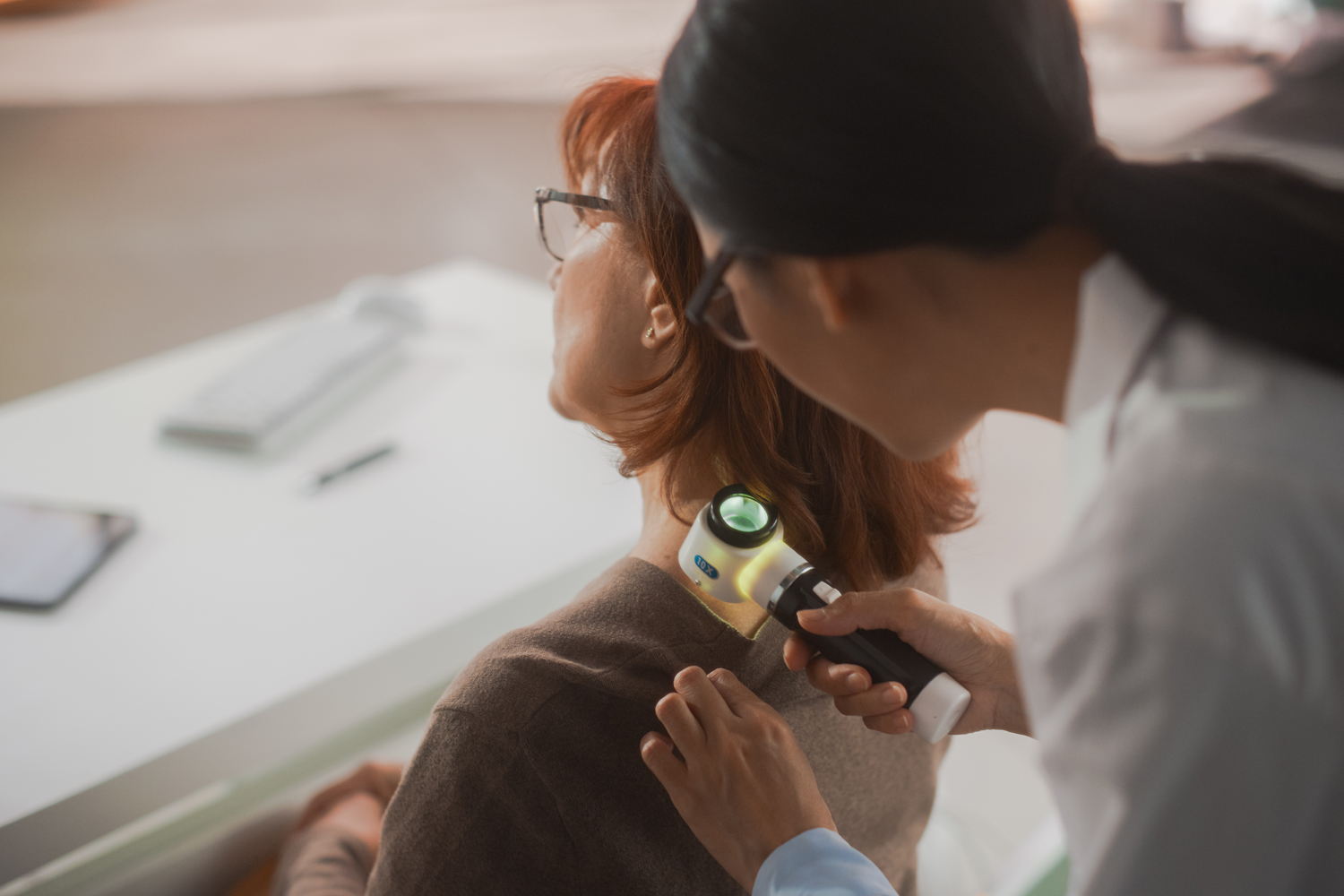
People with high-risk squamous cell skin cancer often have the cancer removed through surgery or other procedures. Depending on the location and clinical features of the cancer, some patients may undergo Mohs surgery, a precise technique to remove the cancer layer by layer while sparing healthy tissue. Other patients may receive radiation alone or after surgery.
On Oct. 8, 2025, Libtayo (cemiplimab) became the first treatment for high-risk squamous cell carcinoma approved by the Food and Drug Administration for use after surgery and radiation to reduce the chance of recurrence. “Immunotherapy remains the mainstay of treatment in the metastatic setting, so it is exciting to see this advance now progressed into earlier-stage disease,” says Meredith McKean, a medical oncologist at Sarah Cannon Research Institute in Nashville, Tennessee. “Clinical trials are ongoing in the anti-PD-1 refractory space because, while we have made progress, additional treatments are needed for patients who do not respond to frontline immunotherapy.”
Some patients may also receive immunotherapy as part of neoadjuvant therapy, which means it’s used to shrink a tumor before surgery. In fact, neoadjuvant immunotherapy to shrink a tumor often allows for a more “definitive” and successful surgical removal, Lee explains.
“Many dermatologists may simply ‘freeze off’ a spot without discussing the full range of treatment options,” Sondak says. In most cases, that’s often all that is needed. However, Sondak recommends people with squamous cell carcinoma take time to ask their doctors questions about the risk of recurrence and whether any additional options, such as radiation and immunotherapy, are appropriate.
Cancer Today magazine is free to cancer patients, survivors and caregivers who live in the U.S. Subscribe here to receive four issues per year.