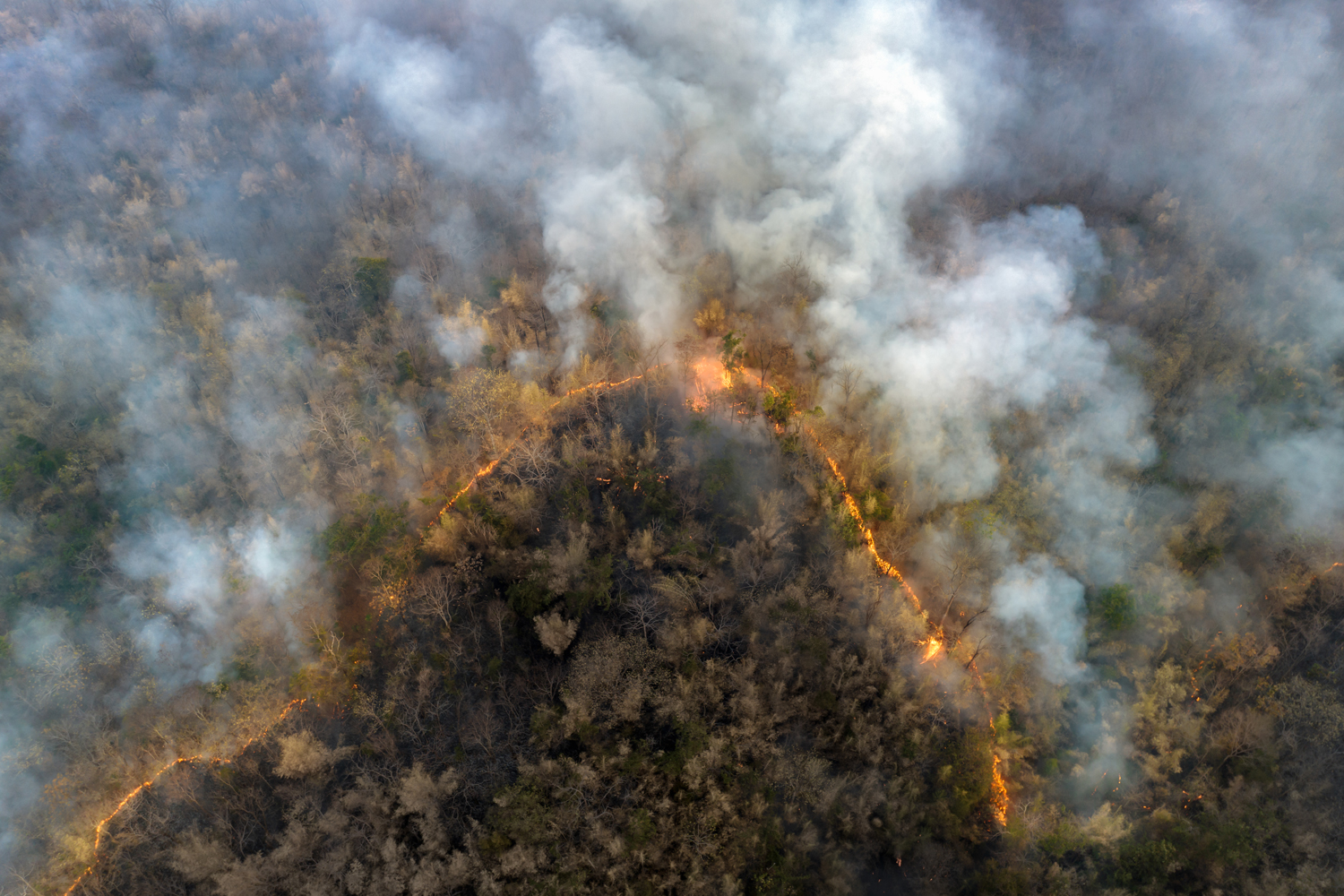
EXPOSURE TO WILDFIRE SMOKE may increase the risk for five cancer types, according to research presented April 21 at the Association for Cancer Research (AACR) Annual Meeting 2026 in San Diego. (The AACR publishes Cancer Today.)
Large wildfires have garnered attention in recent years, both for the direct damage they have caused and the plumes of smoke that have traveled many miles to major cities, such as Los Angeles, Seattle, New York, Toronto and Philadelphia. According to the nonprofit Climate Central, the western U.S. now has three times as many large fires each year as it did in the 1970s.
Wildfire smoke contains many potentially harmful substances, including some known to cause cancer, and is a major source of air pollution. Fine particulate matter, or PM2.5, small particles in the air that can be breathed in and enter the blood stream through the lungs, were declining for many years as stricter policies reined in air pollution, but that trend reversed in the 2010s, in large part due to the increased number of wildfires.
Some research has focused on the short-term effects of wildfire smoke on cardiovascular and respiratory health, according to Shuguang Leng, a molecular epidemiologist at the University of New Mexico in Albuquerque who presented the study. For example, a 2023 study in JAMA found smoke from wildfires in Canada caused a spike in asthma-related emergency department visits hundreds of miles away in New York City. “However, the evidence supporting the chronic health effects is really lacking at this moment. Specifically for cancer risk, there are not [many] studies,” Leng said at a press conference. “Wildfire smoke season has become a very common thing, and people are repeatedly exposed to wildfire smoke each year.”
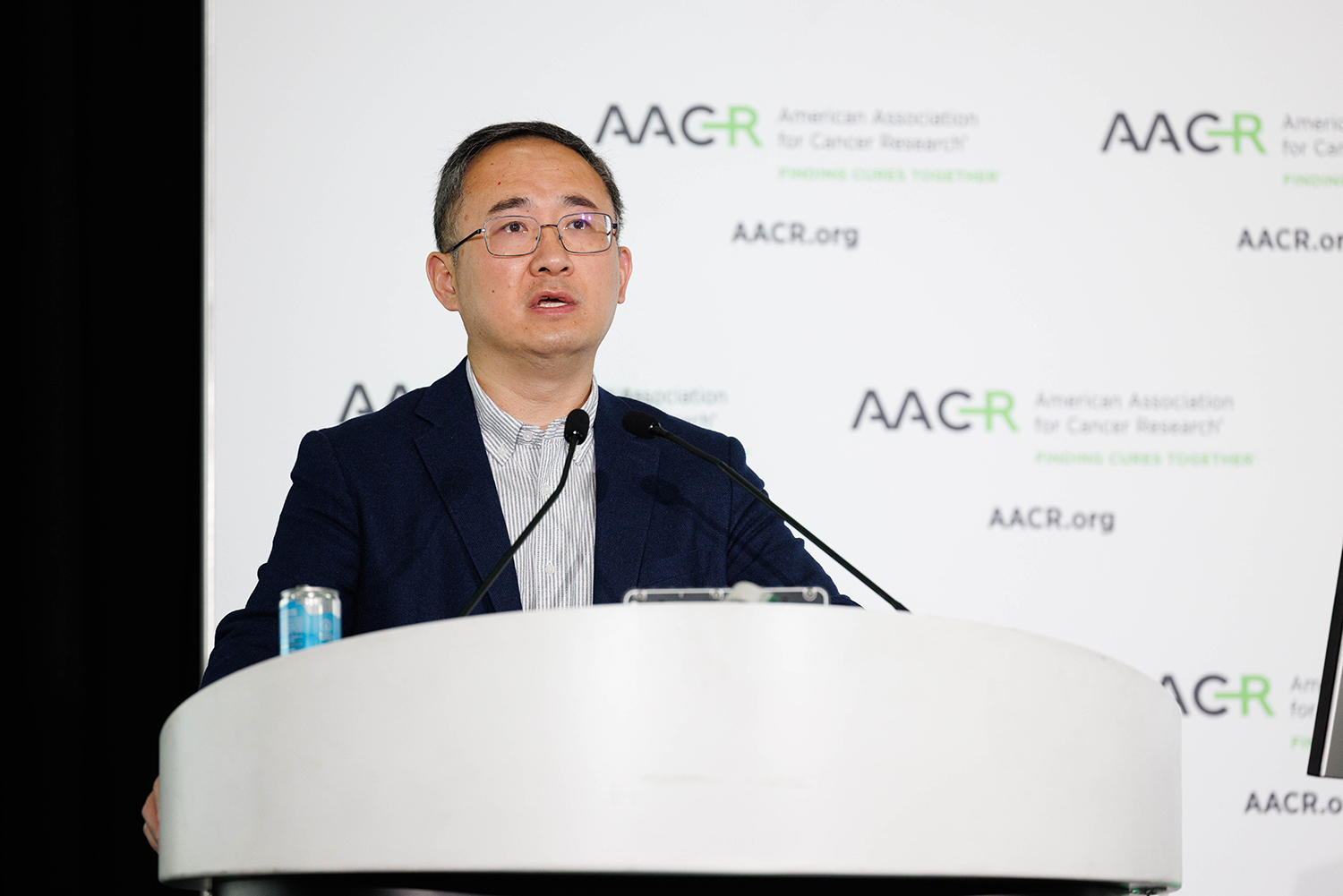
Shuguang Leng, a molecular epidemiologist at the University of New Mexico in Albuquerque, presents results of a study that assessed the link between wildfire smoke exposure and cancer risk. Leng presented the results April 21 during the American Association for Cancer Research Annual Meeting 2026 in San Diego. Photo © AACR/Scott Morgan
Leng and colleagues set out to study whether wildfire smoke exposure could increase cancer risk over time. For the study, researchers assessed air pollution samples and satellite images from areas where 91,460 people who were already participating in a cancer screening trial lived.
The findings linked wildfire smoke exposure to significant increases in the risk for five cancer types: lung, bladder, colorectal, breast and blood. Researchers noted a dose-response relationship, meaning people who encounter higher amounts of smoke had commensurately higher cancer rates, Leng said. For each additional microgram per cubic meter of wildfire-related particulate matter, the estimated risk increased by:
- 92% for lung cancer,
- 131% for colorectal cancer,
- 109% for breast cancer,
- 249% for bladder cancer, and
- 63% for blood cancers.
Between 2006 and 2018, researchers found participants had been exposed to a median three-year average of 0.37 micrograms per cubic meter of fine particulate matter and about two days of smoke plumes in their area.
“For the general public, the key message is that wildfire smoke is not only a short-term respiratory or cardiovascular concern; chronic exposure may also carry long-term cancer risks,” said Qizhen Wu, a study author and a postdoctoral fellow at the University of New Mexico Comprehensive Cancer Center in Albuquerque, said in a press release. “Notably, increased cancer risk may occur even at relatively low levels of wildfire smoke PM2.5 commonly experienced by general populations.” If wildfire frequency continues to rise, which many experts expect even under conservative models, more people will be exposed to still higher levels of particulate matter, and wildfire smoke could become a major driver of cancer in the U.S., Leng said.
Cancer Today magazine is free to cancer patients, survivors and caregivers who live in the U.S. Subscribe here to receive four issues per year.