JILL FELDMAN WAS CURLED UP on the bathroom floor in her home in Deerfield, Illinois, in 2019, her stomach aching with pain. Her 21-year-old son, Jack, discovered her and wanted to call 911, but Feldman insisted she was fine. Feldman, who was first diagnosed in 2009 with stage I non-small cell lung cancer that later metastasized, was accustomed to waiting out cancer treatment side effects.
To stop Jack from calling emergency services, Feldman pushed herself up from the floor. Later that night, she reiterated that everything was OK. Her son begged to differ. He showed her a photo he had taken of her lying in the fetal position. “He was right,” Feldman says. “That was a big deal.”
Feldman’s treatments over the years have included surgery, chemotherapy, radiation and targeted therapy. In March 2019, following a progression, she started taking Tagrisso (osimertinib), which targets an EGFR mutation found in Feldman’s cancer. Common side effects from the medication, such as diarrhea, tiredness and joint pain, can occur for as long as someone takes the drug. Such symptoms can feel mild in the beginning, Feldman says, but over time take a cumulative toll. “They’re like a pebble in your shoe,” she says. “At first, they’re annoying. But as the days and weeks and years go on, it’s more uncomfortable. It can be painful.”
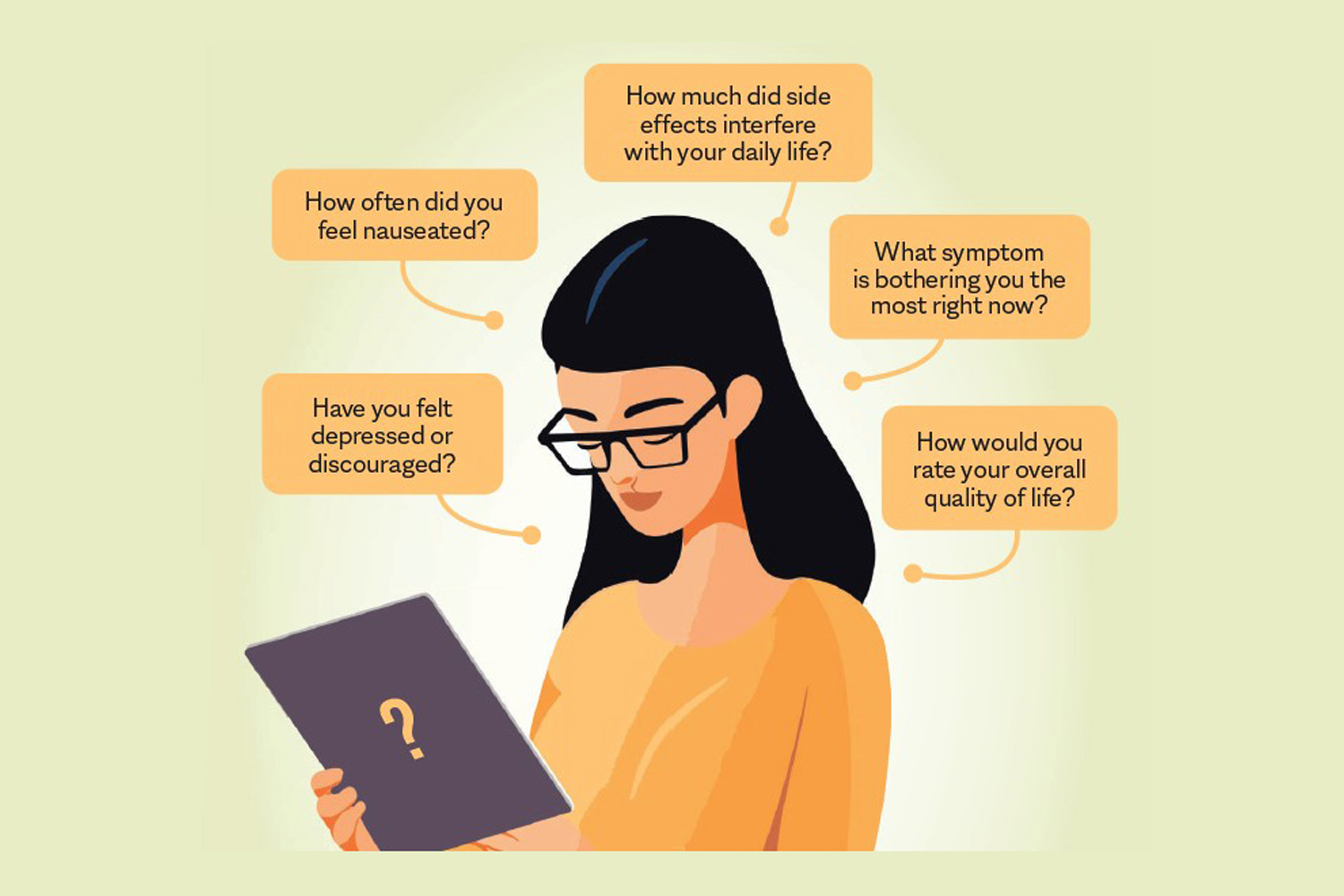
Oncologists are trained to monitor for adverse events from treatment, but research shows that oncologists tend to underestimate the extent of patients’ side effects. Patient-reported outcomes, which are the patient’s own account of their health status without outside interpretation from a clinician, can provide a fuller picture of the patient’s health and help clinicians respond to symptoms, research shows. In fact, some studies have found that doctors who integrate patient-reported outcome measures, such as questionnaires or surveys, into practice can improve patients’ quality of life and reduce emergency room visits. In one trial involving 766 people with metastatic cancer, patients who filled out such questionnaires lived a median of 5.2 months longer than those who did not have that option.
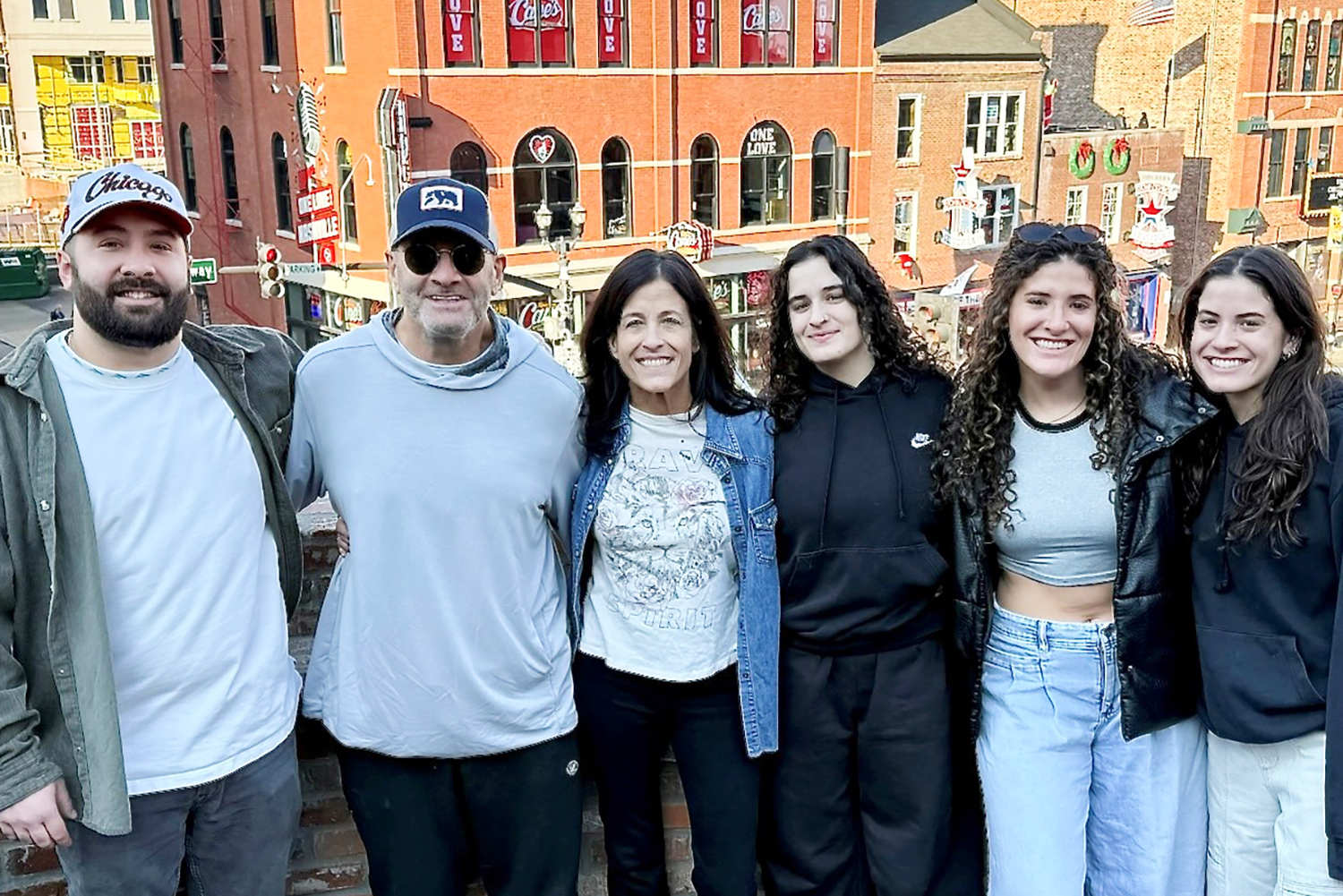
Lung cancer survivor Jill Feldman, third from left, poses with her husband and her four children during a family vacation in Nashville, Tennessee, in December 2025. Photo courtesy of Jill Feldman
“Their symptoms and side effects are being managed better,” says Ethan Basch, the study’s lead author and the chief of oncology and director of cancer outcomes research at UNC Lineberger Comprehensive Cancer Center in Chapel Hill, North Carolina. Basch has researched patient-reported outcome measures and is now helping cancer centers implement such questionnaires. “It’s sort of like a safety net for the patient.”
For Feldman, patient-reported outcomes can help patients live their lives better. “It’s about making sure that the burdens we carry, the impact is seen, it’s heard, it’s accounted for and addressed,” says Feldman, 56, who advocates for oncologists and researchers to incorporate patient-reported outcome measures into clinical care and research protocols. “Patients and families are the onlyreliable source of data on how cancer impacts daily life.”
Downplaying Pain
Oncologists and researchers typically ask patients about side effects and record them with a standard grading system, such as the Common Terminology Criteria for Adverse Events (CTCAE). The CTCAE was initially developed by the National Cancer Institute (NCI) to standardize side effect reporting so researchers could measure the toxicity of drugs on a scale of grade 1 to 5 based on severity. A grade 1 side effect is mild, grade 2 is moderate, grade 3 is severe enough that it often needs hospitalization, grade 4 is a life-threatening emergency and grade 5 is death.
However, research has shown physicians tend to overlook or underestimate the severity of patients’ symptoms compared with accounts from patients themselves. In a study published April 21, 2025, in Cancer Medicine, researchers collected reports on immunotherapy side effects from 39 people with advanced bladder cancer and from their doctors. The clinicians reported fewer symptoms and graded side effects like fatigue, pain and constipation as less severe than their patients did.
In addition, studies often report grade 3 and higher events as a measure for serious adverse effects and put less emphasis on lower grade symptoms that may be considered mild, says Lynne Wagner, a psychologist and the director of the Patient-Reported Outcomes Center of Excellence at UNC Lineberger Comprehensive Cancer Center. Many clinical trials do not assess lower grade adverse events, she adds.
But mild or “tolerable” side effects can feel life altering to patients, Wagner says. People with grade 2 diarrhea, defined as having four to six extra stools a day, may experience abdominal cramping, avoid eating and cancel plans because they are too afraid to leave the house. Someone with grade 2 fatigue might only have a few productive hours in a day, which could upend their life.
People may underreport their own symptoms when doctors ask about them—for a lot of reasons, Wagner says. For example, the symptoms may have resolved by the time patients see the doctor. Patients may be distracted because they are more focused on other treatment news, such as scan results. They may fear the doctor will adjust treatment. “They understand that if they are reporting that treatment is too difficult for them to tolerate, their oncologist may change their treatment [or] they may stop their treatment,” Wagner says. “And, of course, that can be terrifying.”
When Feldman was diagnosed with cancer at age 39, her four children were all younger than 13. She would have endured almost any treatment for the chance to live longer and raise her children, she says. In addition, after years of treatment, she had come to accept some side effects as part of the routine. So she didn’t always speak up when reduced lung capacity kept her from playing basketball with her kids or diarrhea made her anxious to leave the house. “We think that’s just the price to pay,” Feldman says.
But besides affecting quality of life, mild symptoms can also affect treatment adherence over time. A 2023 analysis published in the Journal of Clinical Oncology reviewed symptoms reported by people with chronic lymphocytic leukemia who received either an oral targeted therapy drug or chemoimmunotherapy. People who reported grade 2 side effects had increased odds of being bothered by their symptoms and discontinuing the treatment.
Feldman tried to manage her diarrhea herself with over-the-counter medications, with mixed results. She recalls skipping treatment doses if she had travel or a plane trip coming up, not wanting her symptoms to act up and send her looking for a bathroom up to five times a day.
Capturing the Experience
In 2016, the NCI released a patient-reported outcomes version of the Common Terminology Criteria for Adverse Events, or PRO-CTCAE, for patients to record their own symptoms—without clinician interpretation. The measure, which was developed and designed for clinical trials, followed standard CTCAE reporting. Today, some practices offer similar measures that ask how often symptoms occur and instruct patients to rank how side effects impact daily life from “not at all” to “very much.”
People tend to be more forthcoming on questionnaires than they would be if another person asked them questions, particularly about symptoms that impact sexual or mental health, Wagner says. Collecting patient-reported outcomes in clinical trials can offer additional information about the nature of side effects, including how long a symptom might last or if it worsens over time. Then, if that particular treatment is approved for broader use, oncologists and their patients have a better understanding of the drug’s potential impact.
“It might be after months you become fatigued, or maybe it’s worse in the first couple of weeks,” says Gita Thanarajasingam, a hematologist who treats lymphoma at Mayo Clinic in Rochester, Minnesota. She has published studies about how patient-reported outcome measures can help better relay long-term symptoms that affect quality of life in blood cancers. “It’s important that we collect that information so that we can understand and manage it better.”
Doctors can help manage side effects and symptoms, if you tell them what you are feeling.
Oncologists can often help patients manage side effects, like nausea or pain, that get in the way of daily life, says Lynne Wagner, who directs the Patient-Reported Outcomes Center of Excellence at UNC Lineberger Comprehensive Cancer Center in Chapel Hill, North Carolina. She outlines steps patients can take to help communicate the extent of their symptoms to oncologists:
- Keep track of symptoms. If patient-reported outcome measures are offered, take the time to thoughtfully fill out questionnaires about side effects, and ask how the information is used. Patients may also want to rank or log their symptoms independently in a notebook to see if side effects change or start to get worse over time.
- Identify the right person to tell. Patients should find a point person on their care team, whether it be a doctor, a nurse or another person, whom they feel comfortable approaching about their side effects or with other questions.
- Do not dismiss pain or discomfort. Side effects are a part of cancer treatment, but people with cancer should still inform their care team if they experience symptoms. Even patients who are unsure whether a symptom is worth bringing up should err on the side of communicating early and give examples about how the side effects impact their quality of life.
An increasing number of research studies collect patient-reported outcomes, Thanarajasingam says. In a paper published Sept. 2, 2025, in Contemporary Clinical Trials Communications, she and her colleagues searched for clinical trials that used the NCI’s PRO-CTCAE questionnaire. Researchers found 101 trials used the measure in 2022 and 2023, compared with 21 posted before 2016.
However, clinical trials that test drugs in the hopes of gaining regulatory approvals typically focus on different endpoints, such as overall survival or how much a tumor shrinks. Researchers also focus on grade 3 or higher adverse events to assess a drug’s safety. Data on patient-reported outcomes, when collected, are frequently not reported in the initial publication of trial results, says Lori Minasian, a medical oncologist and the deputy director for the NCI’s Division of Cancer Prevention. That can make the data harder for doctors and patients to find, she says.
Research shows acting on patient-reported outcomes in the clinic can improve patients’ care. In a study published Feb. 7, 2025, in Nature Medicine, researchers followed outcomes for 1,191 people with metastatic cancer, half of whom filled out weekly questionnaires that flagged worsening symptoms to their care team. If patients reported a side effect, teams often responded by calling the patient or their caregiver to help them respond to symptoms at home or by prescribing or changing their medication. After one year, people who completed the questionnaires had fewer emergency room visits and reported better quality of life than those who did not fill out the forms. More than 75% of patients who used the questionnaires also said discussions with their care team improved.
Listening to patients’ reports of their side effects can help doctors address symptoms at their earliest stages before they become medical emergencies, says David Cella, a behavioral health researcher who is the director of the Center for Patient-Centered Outcomes at Northwestern Medicine in Chicago and an author of the Nature Medicine study. “You can avoid emergency room visits. You can avoid urgent care visits,” he says. “Early identification helps reduce wasteful medical spending and helps provide better outcomes for patients.”
However, Cella says, hospitals need to take steps to ensure that the questionnaire data is collected and used to assess care. When Cella and his team first implemented the measures at Northwestern, they sent patients emails asking them to fill out online surveys three days before the visit, but only around a quarter of people answered all the questions. Cella asked patients if they were willing to complete the surveys. Some said if they were going to fill out the surveys, they wanted to know that their care team would actually act on the responses, Cella says.
Cella and his colleagues tasked a staff member with ensuing that patients filled out the form, including giving patients a paper survey at the appointment if they didn’t complete the form prior. They also created a digital system that alerts the care team if patients report increasing symptoms and helps refer patients to physical therapy, mental health services or other programs. Systemwide adoption increased, and some clinics have a 70% completion rate, Cella says.
Into the Clinic
Patty Spears remembers the first patient-reported outcome measure she filled out for a clinical trial back in 2006; the packet was at least 10 pages. After getting diagnosed in 1999 with stage II breast cancer at age 40, Spears joined a trial that assessed her emotional well-being after having surgery to remove her ovaries to reduce her future cancer risk. But the questions felt tedious and repetitive as she filled them out in the waiting room. “It’s kind of stressful, and there’s limited time,” says Spears, now 67 and a research manager and patient advocacy leader at UNC Lineberger Comprehensive Cancer Center.
Spears now works to ensure questions included in patient-reported outcome measures are appropriate for the people who complete them. She reviewed one clinical trial for men with breast cancer, for example, that initially included questions that assumed the respondents were women. The survey had been used in earlier trials that looked at outcomes in women. Spears flagged the issue, and the questions were corrected prior to the survey being distributed.
Spears is excited about integrating patient-reported outcome measures into practice so patients’ symptoms can be recorded and managed in a proactive way. “Every patient is asked the same questions,” Spears says. “Everyone gets their voice heard equally.”

Cancer survivor Patty Spears, right, celebrates her mother’s 90th birthday in 2024 with family members. Photo courtesy of Patty Spears
Lineberger is one of the cancer centers leading an initiative called OncoPRO that helps practices throughout the country implement patient-reported outcomes. It provides guidance to clinics on designing a reporting system, integrating it with electronic medical records, and educating patients. Practices have been slow to embrace patient-reported outcomes because of competing priorities, limited resources, and the training and technology needed, says Lineberger’s Basch, who co-leads the initiative.
More than 30 health systems and community practices across the U.S. are now a part of the OncoPRO initiative, Basch says. In addition, many practices outside of the program are also integrating patient-reported outcome measures into their care. “In 2026, we’re seeing more and more health systems picking this up,” he says. Basch is also experimenting with using an artificial intelligence chatbot to engage with patients and collect patient-reported outcomes.
At the University of Utah Huntsman Cancer Institute in Salt Lake City, oncology nurse and researcher Kathi Mooney is testing an automated reporting system that allows patients to report side effects at home, coaches patients to self-manage symptoms and sends alerts to the clinical team if needed. “There is an erroneous assumption that patients will call their providers when their symptoms are bothering them,” Mooney says. “How do we actually help people and communicate in real time?”
Patients should always report symptoms to their care team and not accept feeling bad as part of cancer treatment, Mooney says. Patients should stress how symptoms impact their lives, she says. This also means providing context, like describing how side effects could force them to skip a grandchild’s recital. “They need to help the provider understand their world,” Mooney says. “Their oncology team wants them to feel better but may not have that as the first focus.”
In December 2025, Feldman’s cancer progressed, so she has added chemotherapy to her Tagrisso treatment. Her fatigue and other symptoms have intensified. But Feldman expects her chemotherapy will be finished this summer, while she plans to stay on Tagrisso for the long term.
After the experience on her bathroom floor in 2019, Feldman raised her stomach issues with her care team, who helped her manage her side effects and reduced her treatment dosage. Just because the side effect is considered low grade doesn’t mean it is low impact, Feldman adds, especially if a patient is on a drug indefinitely. “If it keeps you from living your life, that’s important,” she says.
Cancer Today magazine is free to cancer patients, survivors and caregivers who live in the U.S. Subscribe here to receive four issues per year.