
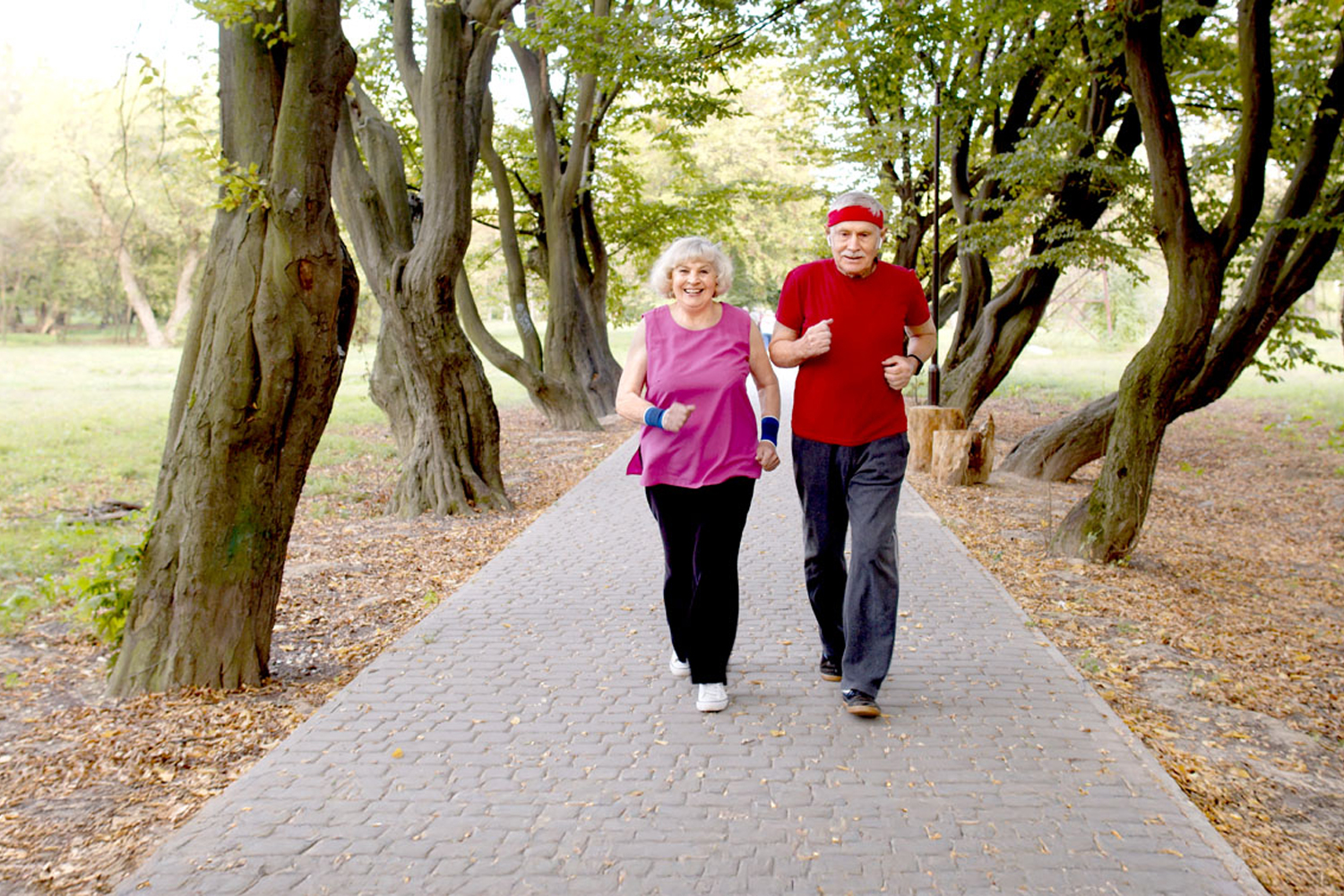
MOUNTING EVIDENCE confirms that regular physical activity can help cancer survivors live longer and reduce fatigue, but the lingering effects of treatment can make some workouts difficult. Interval walking, which alternates between high-intensity exercise and a recovery pace, offers a way for survivors—no matter what their physical condition—to get the benefits of movement.
In a 2007 Japanese study of people ages 44 to 78, researchers found interval walking helped participants build muscle strength and aerobic capacity. The studied routine, nicknamed Japanese walking, involved walking at a fast, high-intensity pace for three minutes before switching to a slower recovery pace for three minutes. This fast-slow combination was then repeated at least four more times.
For cancer survivors, especially those not currently exercising, Japanese walking can be a simple way to start moving, says Sean Smith, a physical medicine and rehabilitative physician at the University of Michigan Rogel Cancer Center in Ann Arbor. “It’s accessible for people who maybe can’t run or bike at high levels due to disability or who are not quite in the physical condition” for more strenuous activities, he says.
A rehabilitation specialist can help design a workout plan tailored to your needs.
If lingering symptoms from cancer treatment make you apprehensive about exercise, ask your doctor to see another specialist who can help you come up with a plan. “If you’re not sure what you can do or you have a symptom that affects how well you move, try to find a rehab doctor,” says physical medicine and rehabilitative physician Sean Smith. The specialist can make tailored exercise recommendations that accommodate problems like neuropathy, balance difficulties or pain.
Incorporating short bursts of faster movement allows cancer survivors, particularly those with post‑treatment fatigue, to progress at their own pace, says Kathryn Schmitz, an exercise oncology researcher at UPMC Hillman Cancer Center in Pittsburgh. “If I tell someone to walk [fast] for 30 minutes, it feels completely overwhelming,” but three-minute increments are less daunting, she says.
To make physical activity a regular habit, ask a friend to check in on you to see if you’re meeting your movement goals, physical medicine and rehabilitative physician Sean Smith recommends. Better yet, find someone who is willing to exercise with you.
For the fast intervals, aim to use 70% of your maximum effort—fast enough that you can only speak a few words at a time. For the slower intervals, walk at a comfortable pace that you can easily maintain, using about 40% of your maximum effort. If the brisk interval feels like too much at first, reduce your speed. Just keep moving because movement at any speed is better for your health than none at all, Schmitz says.
Cancer Today magazine is free to cancer patients, survivors and caregivers who live in the U.S. Subscribe here to receive four issues per year.