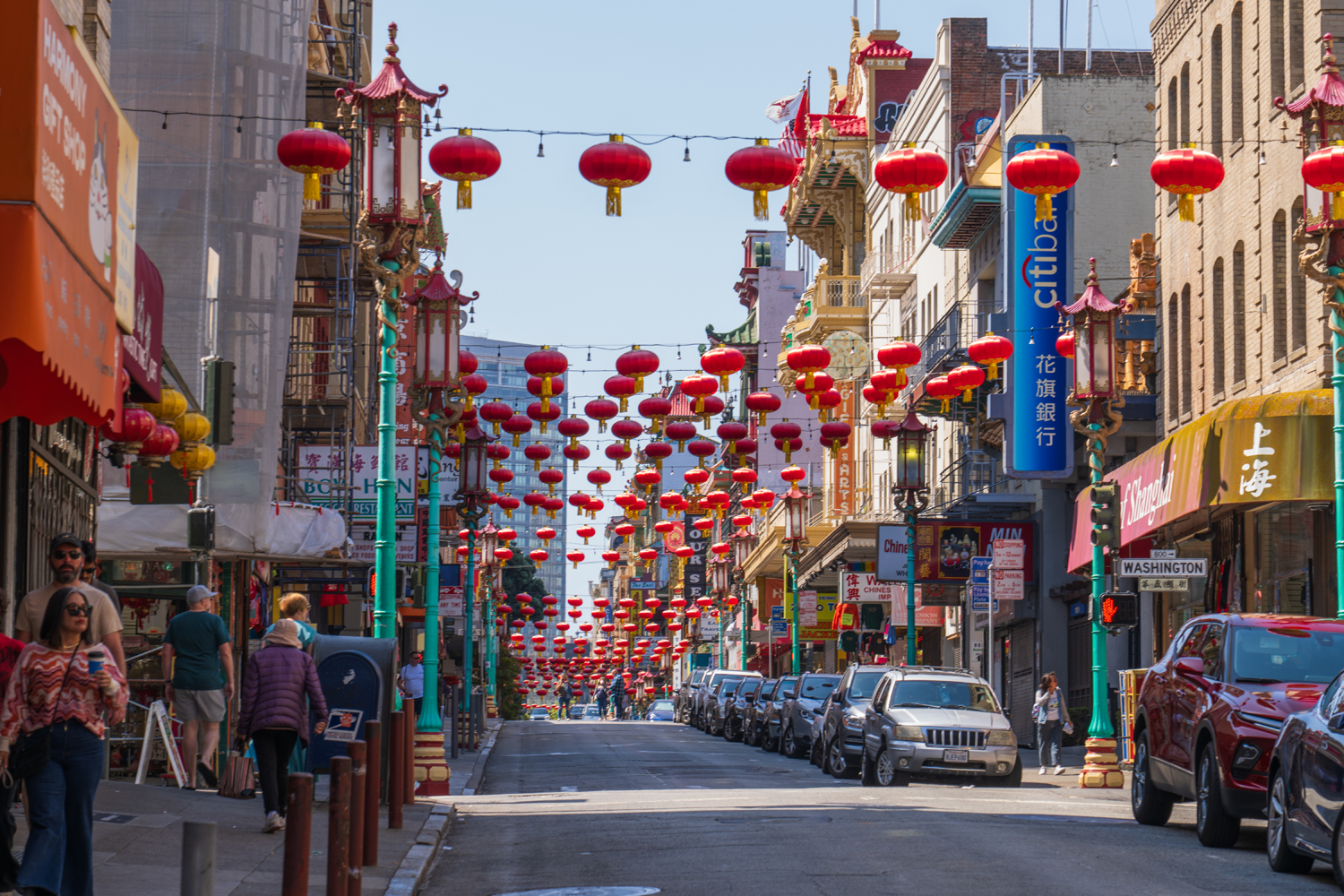
MORE THAN 50 MILLION IMMIGRANTS live in the U.S., constituting about 15% of the population. Upon arrival in America, immigrants often live in communities with others from their native country, forming culturally distinct neighborhoods where residents typically speak a language other than English. Common examples include the Chinatowns and Little Havanas found in major cities.
These ethnic enclaves can become a lifeline for immigrants, connecting them with financial, social and medical resources. “Within ethnic enclaves, shared language, social networks and community institutions can influence how residents obtain health information, connect with health services and find support,” said Kevin A. Henry, a health geographer and cancer researcher at Fox Chase Cancer Center in Philadelphia.
But how might living in an ethnic enclave impact cancer risk and outcomes? During a session held Oct. 19, 2026, at the 19th American Association for Cancer Research (AACR) Conference on The Science of Cancer Health Disparities in Atlanta, researchers and a patient advocate explored potential links between ethnic enclaves and cancer incidence and mortality, reporting the connection varies among different groups. (The AACR publishes Cancer Today.)
Despite the seemingly inconsistent results, presenters encouraged further research on ethnic enclaves, which could potentially improve cancer screening and cancer care. “Research in this area can help cancer centers and public health programs build on community strengths, help with prevention and outreach to local needs, and improve access to care,” said Henry, the session chair.
The Importance of Community Connections
Breast cancer survivor Keeshia Jones has witnessed firsthand the impact community support and resources can have on patients. After her stage I diagnosis in July 2018, Jones started the Southeast Wisconsin chapter of Sisters Network, a nationwide organization that provides education and support for Black women with breast cancer. She also became a mentor for After Breast Cancer Diagnosis (ABCD), a Milwaukee, Wisconsin-based nonprofit that matches newly diagnosed women with survivors who can offer emotional support and practical guidance. Jones, whose cancer progressed to metastatic disease in January 2023, now serves as ABCD’s director of health care and community partnerships.
“I’m able to see personally the critical need to ensure that underserved and underrepresented communities receive the access to care that they need,” said Jones, who offered a patient advocate perspective during the session. “We know that cultural connections are so important and powerful, and they can make the difference in someone reaching out for support and then actually following through to get treatment and care and screenings.”
Jones noted some racial and ethnic groups may distrust the medical system or have limited transportation access, housing insecurity and low health literacy, all of which can prevent them from accessing care. However, she said, patient advocates can help steer these people to the services they need. “The boots on the ground—the patients advocates, the navigators—can help directly bridge the gap to help improve lives and improve cancer outcomes,” Jones said.
Links Between Enclaves, Cancer Outcomes Vary by Ethnic Group
To assess how living in an ethnic enclave can impact cancer outcomes, Salma Shariff-Marco, a cancer epidemiology researcher at UCSF Helen Diller Family Comprehensive Cancer Center in San Francisco, and colleagues looked at breast, cervical and colorectal cancer incidence rates from 2006 to 2017. They specifically analyzed rates for Asian and Latino populations in California, Florida, New Jersey, New York and Texas. Researchers determined a person lived in an ethnic enclave if the area had a high proportion of residents who belonged to a certain racial or ethnic group, were born outside the U.S., had limited English fluency and lived in a household that did not speak English.
Researchers found people living in Asian enclaves in these states had higher incidence of breast and colorectal cancer than Asian people who did not live in an enclave. They found no difference in cervical cancer rates. The findings on Asian enclaves were published April 24, 2026, in Cancer Epidemiology, Biomarkers & Prevention. Conversely, researchers found people living in Latino enclaves had lower rates of breast and colorectal cancer than Latino people who did not live in an enclave. Latinos living in enclaves had higher cervical cancer incidence.
The study also examined stage at diagnosis. In the Asian population, people living in an ethnic enclave were less likely to be diagnosed with late-stage breast and colorectal cancer than those who did not live in an enclave, although the link for colorectal cancer was no longer significant after researchers adjusted for factors like age and insurance coverage. In the Latino population, people living in an ethnic enclave were more likely to be diagnosed with late-stage disease across all three cancer types, but only the association for breast cancer remained in the adjusted analysis.
In addition, among the Asian population, people living in an ethnic enclave were less likely to die from breast and male colorectal cancers than those who did not live in an enclave. There was no association for cervical and female colorectal cancers. In the Latino population, people living in an ethnic enclave were more likely to die from breast and male colorectal cancers than those who did not live in an enclave. There was no link with female colorectal cancer.
“What we learned is that not all ethnic enclaves are the same,” Shariff-Marco said.
Overlapping Ethnic Enclaves Can Experience Different Outcomes
While some ethnic enclaves have clearly defined borders, most have less certain boundaries. Ethnic enclaves are not mutually exclusive neighborhoods but often overlapping “shared spaces,” according to Daniel Wiese, a cancer disparities researcher with the American Cancer Society. “Many of those groups live in the same area, and they share the same resources when it comes to access to health care,” he said.
Using census data for New York City, Wiese and colleagues created a map of the city’s five boroughs that designated specific areas as ethnic enclaves. They deemed a neighborhood to be an ethnic enclave if 40% of its population or more than 1,000 residents were born in a specific country. The same neighborhood could be treated as multiple ethnic enclaves based on its residential makeup.
Next, researchers used New York state cancer registry data to look at breast cancer incidence rates in New York City among women 20 and older. They compared rates for non-enclave neighborhoods with those for the 10 largest ethnic enclaves. They also compared rates from 2008 to 2012 with rates from 2015 to 2019.
From 2008 to 2012, there were 159.4 cases of breast cancer per 100,000 women in non-enclave neighborhoods, compared with 132.4 cases in ethnic enclaves. Looking at rates for 2015 to 2019, researchers saw similar increases in both types of neighborhoods, as rates reached 166.4 cases per 100,000 women in non-enclave communities and 142.7 cases in ethnic enclaves. Haitian communities experienced the largest increase in breast cancer incidence, while Arab/Middle Eastern enclaves saw a slight decrease.
Researchers found similar results when looking specifically at localized breast cancer incidence, with rates in ethnic enclaves lower than in non-enclave neighborhoods and the difference holding steady over time. Also, people living in enclave and non-enclave communities had similar rates of advanced cancer across both time periods. However, rates for stage-specific disease varied significantly across ethnic groups. For example, Wiese noted, half of the enclaves saw increases in advanced breast cancer incidence, while the other half experienced decreases.
“The overall incidence rates for breast cancer increased in the [entirety of] New York City, and that increase was largely driven by the increase in the localized-stage incidence,” Wiese said. “But when it comes to the ethnic enclaves, it appears there are substantial differences between the immigrant enclaves for both localized-stage incidence and advanced stage.”
Common Features of Enclaves May Reveal How to Improve Cancer Outcomes
As Shariff-Marco’s and Wiese’s studies highlighted, research has not discovered a clear connection between living in an ethnic enclave and cancer outcomes. However, researchers need to look for common features across enclaves that drive those associations, according to Marilyn Tseng, a health equity researcher at California Polytechnic State University in San Luis Obispo, California.
The way a scientist approaches research on ethnic enclaves can influence what they are looking for, Tseng noted. Epidemiology and immigration studies tend to focus on social relationships in these neighborhoods, which can help patients navigate the health care system and provide support during cancer treatment. Meanwhile, segregation-focused studies tend to highlight unequal access to resources and structural constraints, such as exposure to environmental pollutants. These different strands of research illustrate how ethnic enclaves may impact residents’ health in multiple ways, Tseng said. “What we see depends on the conceptual lens that we bring to it,” she said.
Additionally, two enclaves of people from the same country can be drastically different. For example, Chinatown in Philadelphia functions very differently than a Chinese farming community in rural California, Tseng said. “Enclaves differ enormously with respect to their histories, their geographies, their institutions and their populations,” she said.
Instead of focusing on finding an association between a specific enclave and cancer, Tseng encouraged researchers to establish consistent patterns of association between a specific mechanism and cancer. For example, trusted community institutions could facilitate access to cancer care, but the presence of these institutions may vary across ethnic enclaves, even those from the same country of origin. “Maybe we should stop expecting the enclave-cancer association to be universal or consistent and instead ask which mechanisms might be generalized across different contexts,” Tseng said.
Cancer Today magazine is free to cancer patients, survivors and caregivers who live in the U.S. Subscribe here to receive four issues per year.