
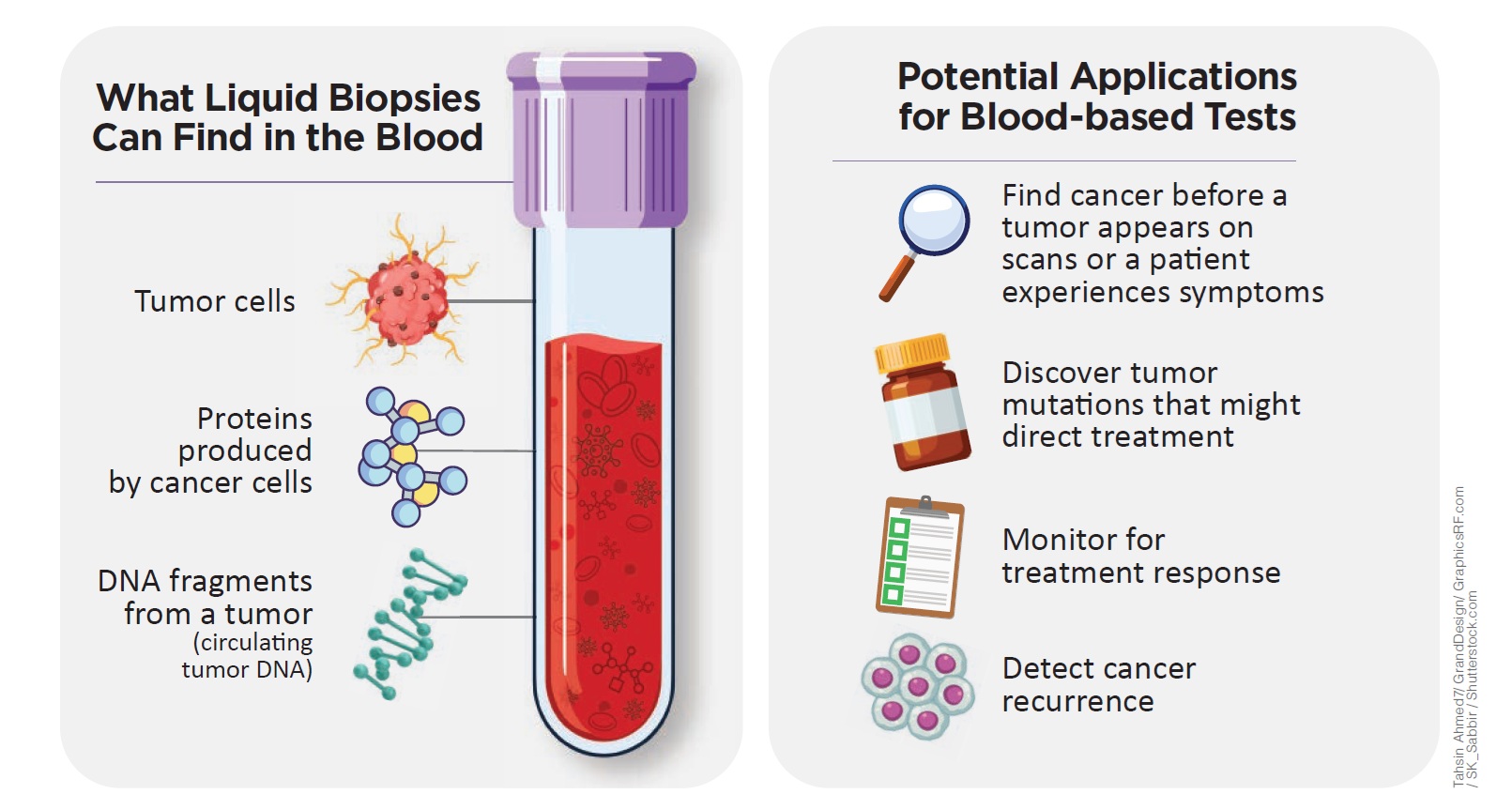
WHEN TUMORS GROW, cells break off and enter the bloodstream. The blood may contain whole tumor cells, proteins produced by cancer cells or DNA fragments from the tumor called circulating tumor DNA (ctDNA). Blood tests can detect this evidence that the cancer leaves behind.
A standard tissue biopsy often involves surgery and sedation, but a liquid biopsy is minimally invasive because it looks at fluid from the body, most commonly blood. After a blood draw, the patient’s sample goes to a lab, where a machine separates blood cells from the liquid part of blood known as plasma. A pathologist then analyzes any tumor cells, proteins or ctDNA found in the plasma.
These tests help guide some treatment decisions. For example, a liquid biopsy could detect if lung cancer has an EGFR mutation, which means it might respond to a tyrosine kinase inhibitor. Other times, doctors use a blood test to see if ctDNA levels have decreased, which may indicate the disease is responding to treatment. For people who have completed treatment, these tests can detect cancer recurrence even before a tumor grows large enough to appear on standard imaging.
Researchers are studying if liquid biopsies can detect cancer before it shows up on scans or symptoms appear. The Food and Drug Administration (FDA) has approved one liquid biopsy for cancer screening: the Shield test for colorectal cancer detection. However, research indicates the test identifies fewer precancerous growths and early-stage cancers than standard colonoscopy. Other blood tests that aim to find multiple types of cancer at early stages, such as Cancerguard and Galleri, have yet to be approved by the FDA, even though they are available commercially.
Sources: American Association for Cancer Research, American Cancer Society, Cleveland Clinic, Memorial Sloan Kettering Cancer Center, New England Journal of Medicine
Cancer Today magazine is free to cancer patients, survivors and caregivers who live in the U.S. Subscribe here to receive four issues per year.