
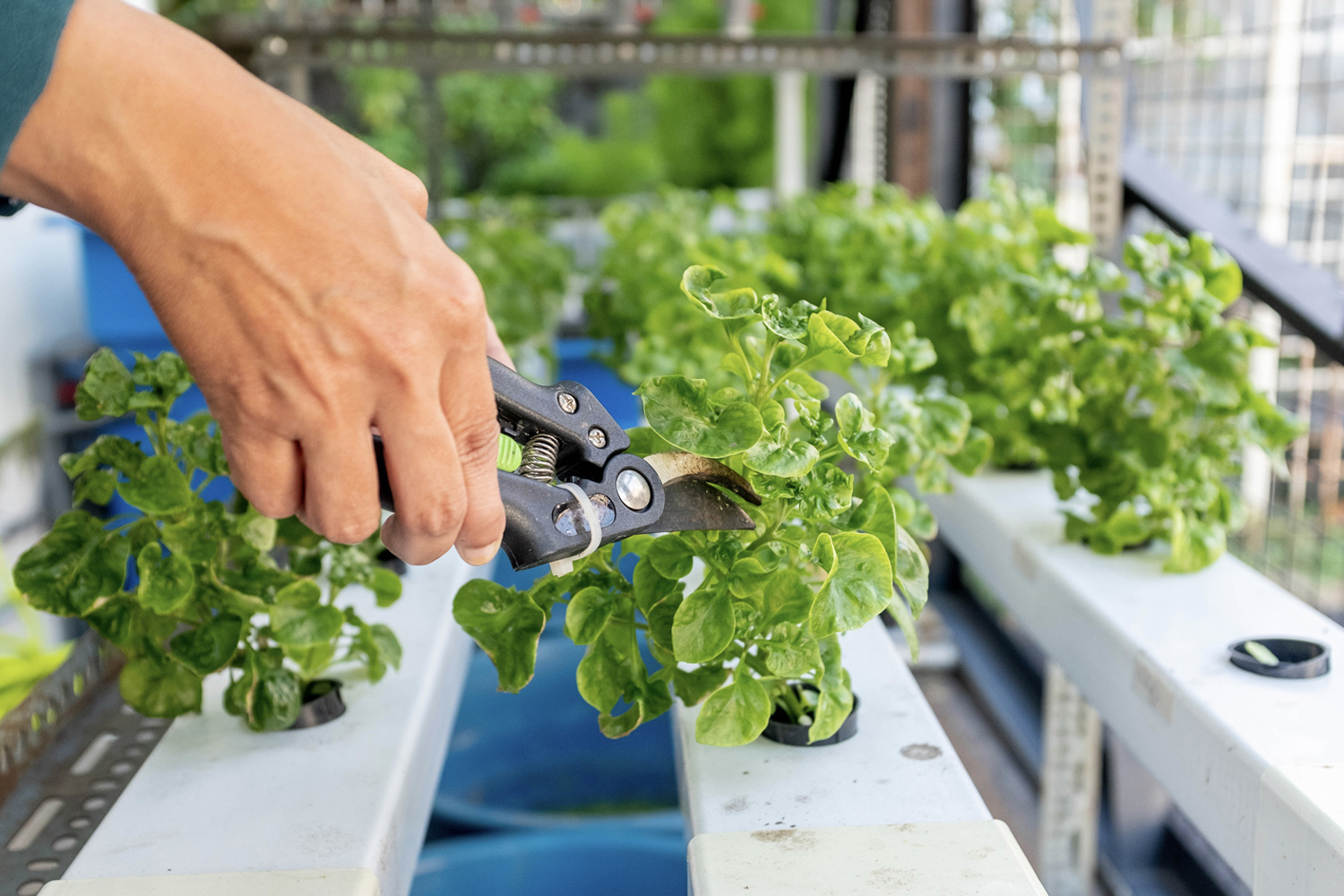
RESEARCH SHOWS GARDENING can help people undergoing cancer treatment ease their anxiety, increase how much produce they eat and improve their quality of life. But not everyone has access to a patch of soil. A study suggests hydroponic gardening—which brings the growing process indoors—provides similar benefits.
Hydroponic gardening is a soil-free growing method that involves cultivating plants in nutrient-rich water. Small tabletop hydroponic gardening kits can make gardening more accessible for people who lack outdoor space or have difficulty kneeling down to tend a garden bed. Sold online and at garden centers, small kits range in price from $50 to $150 and allow people to grow vegetables, herbs and fruits, such as strawberries, year-round. “I’m in Texas where summer is scorching, so outdoor activities are difficult then,” says Taehyun Roh, an environmental epidemiologist at Texas A&M University in College Station. “We thought this might be a good alternative.”
Growing herbs in small containers of soil on a windowsill or porch can be a simple way to start gardening. Basil, Thai basil, oregano, thyme and rosemary all grow well in sunny locations and can enhance the flavor of salads, soups and stir-fries, according to Dena Champion, an oncology nutrition specialist at Ohio State University Wexner Medical Center in Columbus.
In a study published Oct. 15, 2025, in Frontiers in Public Health, 36 adults undergoing chemotherapy for various cancer types received a small hydroponic gardening kit. The kits included a grow light, liquid plant nutrients, lettuce seeds and instructions. Over eight weeks, the participants planted the seeds, checked them regularly and harvested the salad greens. They also completed surveys on their mental health, quality of life and diet.
As the eight-week period progressed, participants reported fewer depression symptoms and improved mental well-being, emotional and social function, and overall quality of life. By the end of the study, participants ate more fruits and dark green vegetables than they did at the start.
Wearing gloves while gardening can help prevent infection.
Plants and soil may contain fungi or bacteria that can increase the risk for infection in people with compromised immune systems. Before digging in, people in active treatment should ask their medical team if it is safe for them to garden, says Dena Champion, an oncology nutrition specialist at Ohio State University Wexner Medical Center in Columbus who helps oversee a gardening program for cancer survivors. To help avoid infection, she recommends patients wear gloves while gardening and wash their hands immediately afterward.
Roh, the study’s lead author, suspects the improvements in mental health scores occurred because tending vegetables can be a welcome distraction during treatment. “Patients repeatedly told us that caring for their plants gave them something to look forward to,” he says. “It was a small but meaningful source of joy and control.”
Cancer Today magazine is free to cancer patients, survivors and caregivers who live in the U.S. Subscribe here to receive four issues per year.