
Since learning she had metastatic breast cancer, Janet doesn’t measure time the way she once did. These days, she measures it in moments: mini-vacations between treatments, afternoons laughing with her grandson, Owen, and the next outing she gets to look forward to on the calendar.
Vanessa remembers the exact moment when everything changed. One day, she was working as a travel nurse, building a life she loved and planning for the future. The next, she was navigating a diagnosis that forced everything to stop.
Though their journeys differ, Janet and Vanessa share a significant commonality: both are living with metastatic breast cancer, a disease that demands navigating ongoing care and constant communication with care teams. More specifically, both women have metastatic triple-negative breast cancer. This aggressive subtype has historically had fewer treatment options than other forms of the disease. Until recently, chemotherapy remained the primary, and often only, treatment available.
Janet and Vanessa discussed their treatment options with medical oncologist and breast cancer researcher Gregory Vidal at West Cancer Center and Research Institute in Memphis, Tennessee. During their individual discussions with Vidal, Janet and Vanessa learned about antibody-drug conjugates, or ADCs, which are used to treat some types of metastatic breast cancer. More recently, ADCs have become available as a treatment option for those who have been newly diagnosed with metastatic triple-negative breast cancer.
Time is of the essence. According to a real-world study, for nearly half of women with metastatic triple-negative breast cancer, their first treatment is their best—and sometimes only—opportunity to keep the cancer from growing.
“When I make a decision about selecting an ADC for a patient, I tend to use it earlier in the treatment journey,” Vidal says. “Patients tend to have better tolerance because we’re not multiplying on the existing toxicities.”
Understanding ADCs
What exactly are ADCs? An ADC combines a target-seeking antibody with a cancer-killing medicine. The antibody helps guide the medicine to specific proteins on certain cells, including cancer cells, delivering powerful medicine more directly to cancer cells.
“Traditional chemotherapy circulates throughout the body,” Vidal explains. “ADCs work a little differently. They’re targetable. They’re intended to deliver the [medicine] attached to them more directly to cancer cells.”
While ADCs represent an evolving area of treatment for some people living with various types of metastatic breast cancer, Vidal emphasizes that people’s responses to ADCs will vary.

Vanessa spent years caring for patients as a nurse, but becoming a patient changed everything. Photo by Futureman Digital
“Not all ADCs are the same,” he says. “Each treatment has its own potential side effects, and every patient experiences treatment differently. It’s important to consider patients’ goals, wishes and needs so that we can try to realistically plan.”
Vanessa and Janet feel grateful to have found a strong network of supporters, whether by engaging with doctors or relying on friends and family.
For Vanessa, side effects from her treatment altered her body image and sense of identity, especially when she started losing her hair. Still, she leaned into her faith and accepted help from family and close friends, which was a change for the nurse who was used to taking care of others.
Vanessa’s nursing background also meant she understood healthcare systems, but becoming a patient changed everything.
“I knew about [breast cancer], but I didn’t know what it truly involved until it happened to me,” she says.
For Janet, understanding how to fit life’s joyful rhythms into the relentless drumbeat of treatment has helped her keep moving forward. Over time, she learned to plan meaningful moments around appointments and prioritize the activities that brought her joy.
“Every couple months, I try to have something to look forward to,” Janet says. “That matters.”
Whether it is time spent with Owen, a trip to see family or even just a short escape from the house, having something planned helps her to focus on life between treatments.
Advocating for Yourself at Every Step
Both women have learned to become informed and engaged in treatment decisions.
Vanessa leaned into research about her diagnosis and forged connections with other cancer survivors who understood what she was experiencing.
“I tried to educate myself as much as possible,” she says. “I talked to women going through it, my doctors [and people in] support groups. I wanted to understand what to expect.”
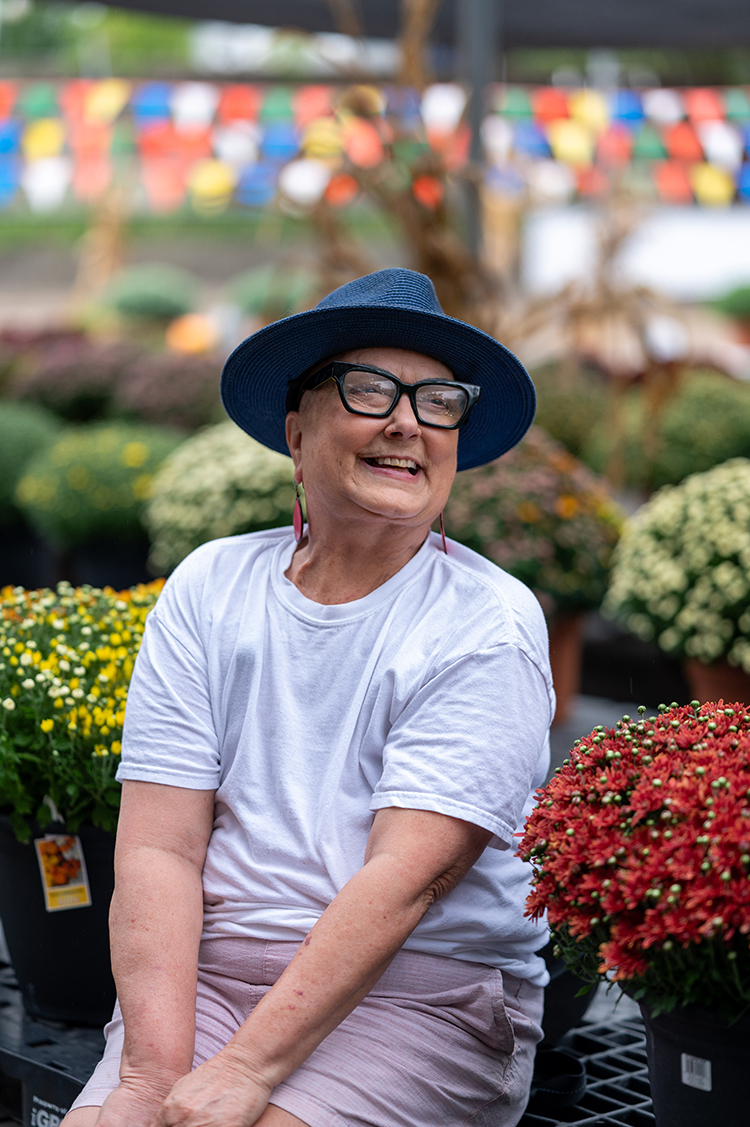
For Janet, treatment discussions help her better plan time with her loved ones. Photo by Futureman Digital
Janet’s advocacy looked different. She focused on selecting a knowledgeable medical team that was well-versed in treating her cancer.
“I’ve always felt like it’s really important to trust your doctor,” she says. “I’ve said that from day one.”
Vidal encourages patients with metastatic breast cancer to feel empowered to ask questions about side effects, quality of life and treatment options, including whether an ADC may be right for them.
“With more heads focusing on the issue, we’re more likely to have better outcomes,” he says.
For Janet, these treatment discussions are rooted in a future that’s measured in moments with Owen, with more laughter and more memories.
For Vanessa, the knowledge of different approaches allows her to continue to hold onto the future she still sees for herself—one grounded in family, friendship and possibility.
While metastatic breast cancer remains a lifelong disease, the treatment landscape continues to evolve. For patients like Janet and Vanessa, understanding treatment options like ADCs can help them create a care plan grounded in what matters most to each individual.
Their stories don’t stop here. Visit Expose-MBC.com/ADC to learn more about Janet and Vanessa’s stories and treatment experiences.
About Gilead and Kite Oncology
Gilead and Kite Oncology are committed to advancing research and supporting people impacted by metastatic breast cancer through education and advocacy.
GILEAD and the GILEAD logo are trademarks of Gilead Sciences, Inc.
KITE and the KITE logo are trademarks of Kite Pharma, Inc.
All other marks are the property of their respective owners.
US-UNBC-4352 08/26
Cancer Today magazine is free to cancer patients, survivors and caregivers who live in the U.S. Subscribe here to receive four issues per year.
Disclaimer: Sponsored advertising content is written by the advertiser and does not necessarily reflect the views of Cancer Today or the American Association for Cancer Research (AACR). Cancer Today’s editorial staff was not involved in developing or creating the sponsored content. Content on the Cancer Today website is not intended to be a substitute for professional medical advice. For diagnosis or treatment of any medical condition or any questions you may have about a medical condition, please consult your physician or other qualified health care provider. Neither Cancer Today nor the AACR is liable for any loss or damage incurred as a result of reading or following the information or engaging with any of the advertising or sponsored advertising content on the Cancer Today website. The mention of any company, service, product or treatment does not constitute an endorsement by Cancer Today or the AACR.